Why Grinding and Polishing an Existing Slab Makes Sense
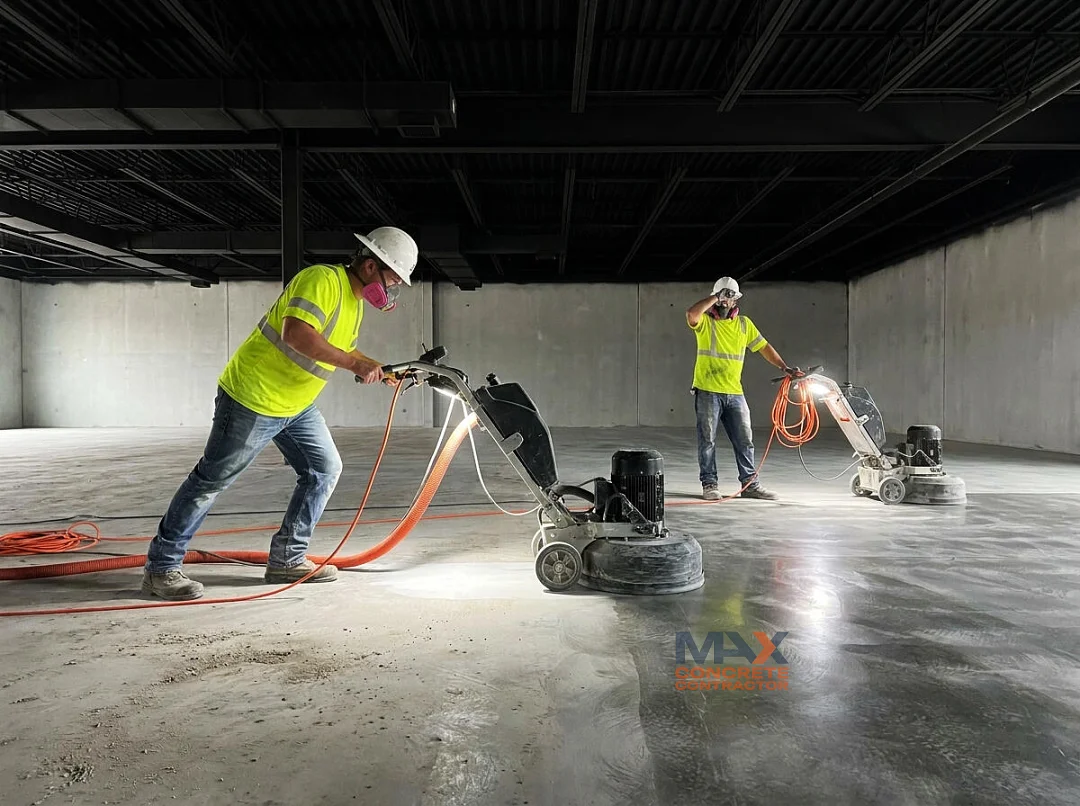
Once a building is already standing, tearing out the existing concrete floor and pouring a new one is rarely as simple as it sounds. Demolition means breaking out a structural slab that's often tied into walls, plumbing stub-outs, and electrical conduit running beneath it, and removing it usually means disturbing finishes in adjacent rooms too, not just the floor itself. A new pour then needs weeks of curing before it can handle the same traffic the old floor was already rated for, all before any finish work even starts.
Grinding and polishing sidesteps almost all of that. The process works with the slab that's already there, using progressively finer diamond tooling to remove the surface layer, expose whatever look is wanted underneath, and seal it, without breaking into anything structural or disturbing the walls around it. A commercial space can often stay in use, or close for only a few days, instead of the weeks a full tear-out and repour would require.
There's a practical sustainability angle here too, even setting aesthetics aside:
- Reusing the existing slab means less concrete demolition debris going to a landfill
- No new batch of cement, which is genuinely one of the more carbon-intensive materials to produce
For a building that's already built, working with the floor that's already poured is usually the faster, cheaper, and lower-impact path to the same result.
Concrete Polishing Equipment Isn't Cheap, and That's the Point
Professional planetary grinders, the machines with multiple counter-rotating heads that actually grind and polish a floor, run anywhere from around $2,750 for a smaller walk-behind unit up to $50,000 or more for a heavy-duty ride-on machine, with used equipment on the resale market averaging somewhere around $12,500. That's before factoring in:
- Diamond tooling, which gets replaced regularly as it wears
- Dust extraction systems that are essentially mandatory rather than optional
- Edge grinders for the areas the big machine can't reach against a wall
The process itself is also less forgiving than it looks. Grinding starts with coarse, metal-bond diamond segments to remove the top layer of concrete and open up the surface, then steps through progressively finer grits, sometimes ten or more stages, switching to resin-bond diamonds once the surface gets smoother, each pass refining the shine and clarity a little further. Rush a stage or skip a grit, and the inconsistency shows up permanently once the floor is sealed. That's really why this isn't a rental-counter job: the equipment cost is real, but the experience needed to read a floor and know when it's ready for the next grit is what actually determines whether the final result looks professional or patchy.
Polishing Concrete Is a Lot More Than Cleaning It Up
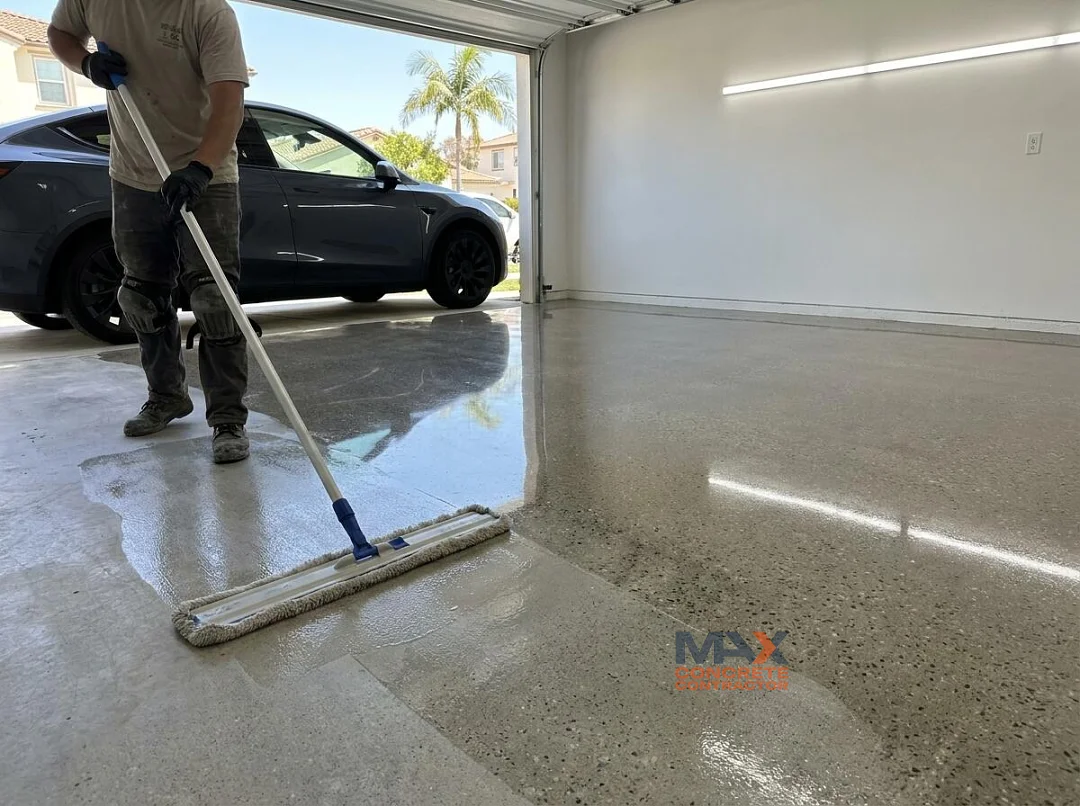
Grinding away the top layer of a slab is only the first part of the job. Once the surface is opened up, a densifier, usually a lithium or sodium silicate solution, gets applied to chemically react with the free lime inside the concrete, hardening the surface and closing up its natural porosity. Skip this step and the floor stays soft and porous no matter how much it's been ground, which shows up later as staining and premature wear. From there, cracks and pits typically get filled, and if color is part of the design, a stain or dye gets worked in before the final polishing passes lock it into the surface.
How far that polishing goes depends entirely on the finish level requested, and the industry actually has a formal way of describing it. The Concrete Polishing Council classifies floors by:
- Aggregate exposure, from Class A (mostly cement paste, barely any stone visible) up to Class C (coarse aggregate exposed across most of the surface)
- A separate gloss scale running from Level 1 (a flat, matte look) up to Level 4 (a deep, mirror-like "wet look" shine)
A basic matte Class A floor might need four or five grinding passes. A Class C, Level 4 high-gloss floor can take more than double that, since each additional level of shine and aggregate exposure means another round of finer grit and more careful polishing. That difference in labor is exactly why "just clean up the old concrete" and "polish it to a showroom finish" are two very different scopes of work, and very different price tags.
The Silica Dust Risk Behind Every Grinding Job
Grinding concrete releases more than visible dust. It releases respirable crystalline silica, particles small enough to lodge deep in the lungs, and repeated exposure over time causes silicosis, an irreversible scarring of lung tissue with no cure. This isn't a theoretical hazard tucked away in a safety manual somewhere, it's serious enough that OSHA built an entire dedicated standard around it.
Under 29 CFR 1926.1153, OSHA sets the permissible exposure limit for airborne silica at 50 micrograms per cubic meter of air, averaged over an 8-hour shift, with an action level of 25 micrograms that triggers additional monitoring requirements. Rather than leaving contractors to figure out compliance on their own, OSHA's Table 1 spells out specific, approved dust control methods for 18 common construction tasks, concrete grinding among them, with different requirements depending on whether the work happens indoors or outdoors and how long the task runs during a shift. Follow Table 1 to the letter, and a contractor is considered compliant without needing separate air monitoring. Skip it, and that same contractor is legally required to measure actual exposure and prove it stays under the limit.
This is exactly why grinding equipment always shows up with an integrated dust shroud connected to a HEPA-rated vacuum system, and why a professional crew never treats that connection as optional, even for a quick job. A rental-store machine without proper dust extraction doesn't just make a mess, it exposes everyone in the building, including the crew, to a genuine long-term health hazard that has nothing to do with how the finished floor looks.
Polished Concrete vs Epoxy Coating: Which Actually Lasts?
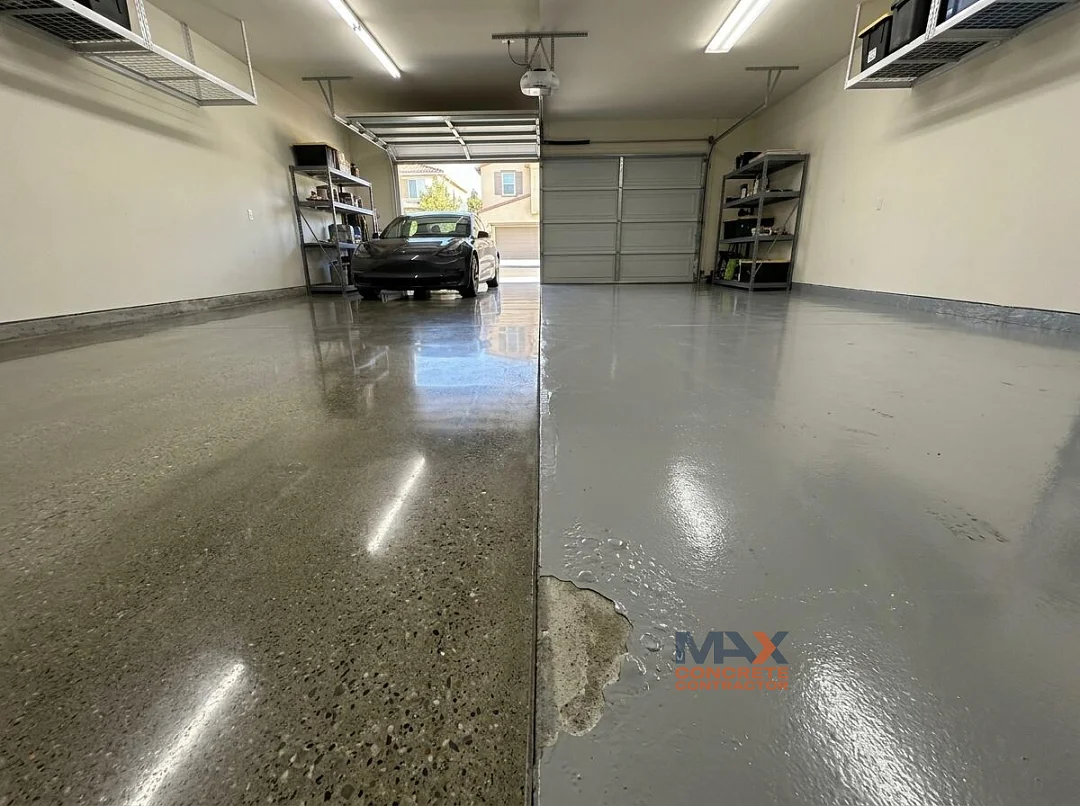
Epoxy and polished concrete solve the same basic problem, a tired-looking or unprotected floor, in fundamentally different ways. Epoxy is a coating applied on top of the slab, a separate material bonded to the surface. Polished concrete is the slab itself, ground down and densified until the concrete's own surface becomes the finish. That distinction turns out to matter a lot over time.
Because epoxy sits on top of the floor rather than becoming part of it, it can delaminate, peel, or chip, especially under forklift traffic, moisture vapor pushing up from below, or years of UV exposure near windows and garage doors. Most epoxy systems need a full recoat somewhere in the five-to-ten-year range depending on traffic, sooner in heavier commercial use, and once it starts peeling in one spot, the whole floor usually needs to be reground and recoated rather than just patched. Polished concrete doesn't have a coating to fail in the first place. Since the finish is the slab itself, there's nothing to delaminate, and normal wear actually tends to deepen the shine slightly rather than degrade it.
Where epoxy still wins is upfront color options and that glossy, uniform look achievable in a single application, along with the ability to hide a rougher existing slab underneath it. But for a floor that needs to perform for a decade or more with minimal recoating and no risk of peeling, polished concrete is usually the lower-maintenance, longer-term choice, particularly in high-traffic commercial and industrial spaces where recoating an epoxy floor means shutting down operations all over again.