What Should a Patio Actually Be Built From?
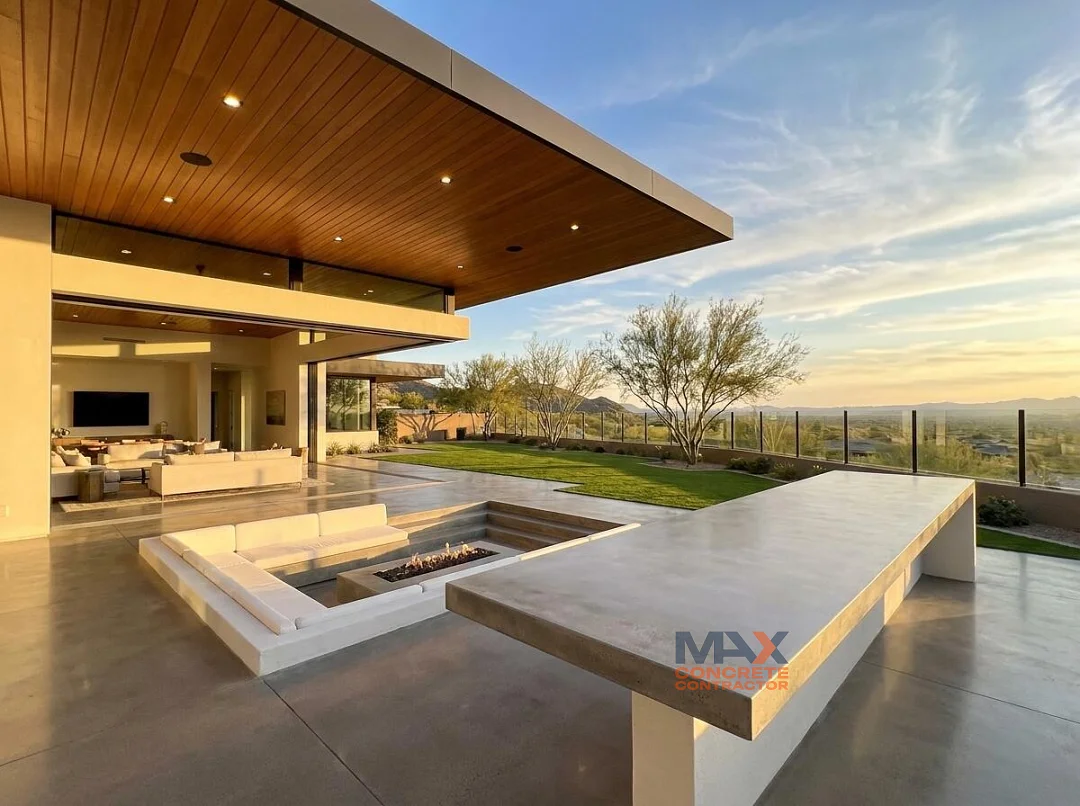
The word patio comes from Spanish, originally describing an open inner courtyard rather than a specific material or shape, which explains why so many surfaces get called a patio today: wood decking, loose gravel, turf, pavers, even glass accents in high-end designs. Each has a place, but almost every durable outdoor living space in Southern California still comes back to one foundation: concrete.
A few common alternatives, and where they fall short:
- Wood decking looks warm but has a real shelf life in this climate. Sun exposure and irrigation runoff break down sealants faster than most homeowners expect, and boards eventually need replacing section by section
- Turf and gravel are useful as accents but can't carry furniture weight evenly or handle heavy foot traffic without shifting
- Glass, when it shows up in a patio design, is almost always decorative rather than structural: fire glass in a fire pit, or glass block inlays set into a concrete surface for lighting effects
What makes a concrete patio different is that it isn't competing with these materials, it's the base that lets you combine them. A poured slab can carry a wood-look stamped pattern for warmth, integrate turf strips between panels the way a grid driveway does, or use exposed aggregate for a natural stone look, all on one continuous, structurally sound surface. For a residential concrete patio meant to last decades rather than one summer, that combination is usually the deciding factor.
How to Land on a Patio Design That Actually Works
Homeowners planning a concrete patio usually land in one of two camps: hire a landscape designer to draw up a full plan, or find a photo online that captures the look they want and go from there. Both paths work, and which one makes sense really depends on the scope of the project.
A landscape architect earns their fee on complex sites: steep grade changes, drainage that has to route water away from a foundation, or a design tying together a pool, outdoor kitchen, and multiple seating areas into one cohesive plan. That level of coordination benefits from someone whose full-time job is thinking in three dimensions before a single yard of concrete gets poured.
For a more straightforward patio, though, a saved photo or two is often enough. Stamped concrete alone comes in dozens of standard patterns, including:
- Ashlar slate
- Running-bond brick
- Wood plank
- Cobblestone
and just as many color and texture combinations, which covers most of the design range homeowners are actually picturing. As a concrete patio contractor, our job at that point is less about reinventing the layout and more about translating a reference photo into the right pattern, color, and finish combination, while making sure the slope, drainage, and joint layout are done correctly underneath it. That's usually where a design idea and a durable, code-compliant slab actually meet.
Is a Built-In Fire Pit Worth It?
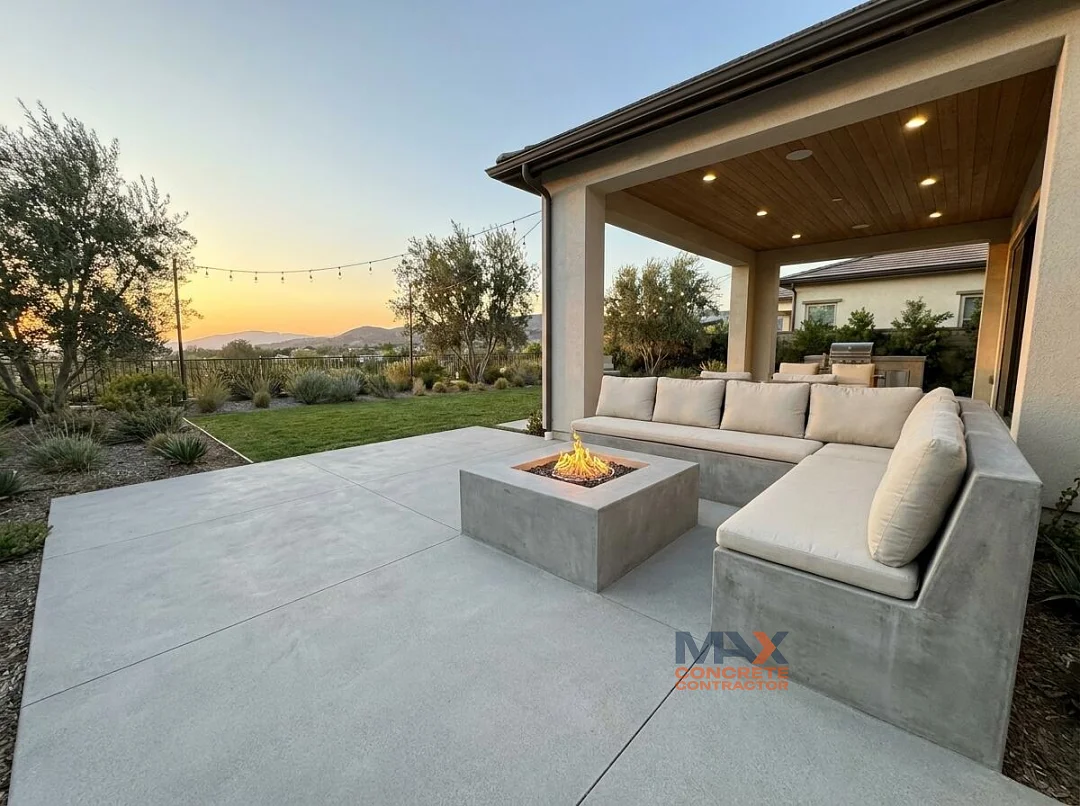
A permanent fire feature changes how a patio gets used more than almost any other single addition. A portable fire bowl gets moved, stored, and eventually forgotten in the garage. A fire pit built directly into the concrete, with matching finish and seating oriented around it, tends to become the actual center of gravity for the whole backyard, the spot people migrate to without thinking about it.
There's a regulatory detail worth knowing before committing to one, though. Since 2009, South Coast AQMD Rule 445 has prohibited permanently installed wood-burning fireplaces and fire pits in new construction across the entire South Coast Air Basin, which includes all of Orange County. Any fire feature that's built in (attached to the ground or the patio slab rather than a movable appliance) has to run on natural gas or propane rather than wood. In practice, that's rarely a downside:
- Gas fire pits light instantly
- They don't leave ash to clean up
- They can run on a timer or remote
which fits a lot better with a patio that's meant to be low-maintenance.
Whether it's worth building depends mostly on how the space gets used. A patio that already hosts regular gatherings, or one built specifically as an outdoor living room, tends to get real, sustained use out of a built-in fire pit. A patio that's more of a side yard walkway probably doesn't need one competing for space.
Choosing the Right Concrete Mix and Finish for a Patio
A patio carries a fraction of the load a driveway does, so the mix design has more room to prioritize appearance over raw strength. Most residential concrete patios in Orange County still use a mix in the 3,000 to 4,000 PSI range and a standard four-inch slab thickness, which is more than enough for furniture, foot traffic, and the occasional grill or hot tub, without the added cost of driveway-grade reinforcement.
Finish is where a patio earns its keep visually:
- A broom finish is the practical baseline, especially near a pool where slip resistance actually matters
- Stamped concrete can mimic flagstone, brick, or wood plank
- Stained concrete adds permanent, rich color without changing the texture at all
- Exposed aggregate gives a natural, high-traction surface that ages well outdoors
Each of these is a legitimate long-term choice, not just a cosmetic upgrade.
One design move that consistently elevates a patio beyond the basics is going multi-level. On a sloped lot, which describes a lot of Irvine backyards, a single flat slab often means one usable elevation and a lot of wasted grade change. Breaking the patio into two or three levels, tied together with short poured concrete retaining walls and integrated steps, turns that slope into distinct zones: a dining area, a lower lounge space near a fire pit, a raised planting bed as a natural divider. It costs more than a single flat pour, but it's usually the difference between a patio that looks like an afterthought and one that looks like it was actually designed for the lot it sits on.
Concrete Patio vs Pavers and Travertine: What Actually Holds Up
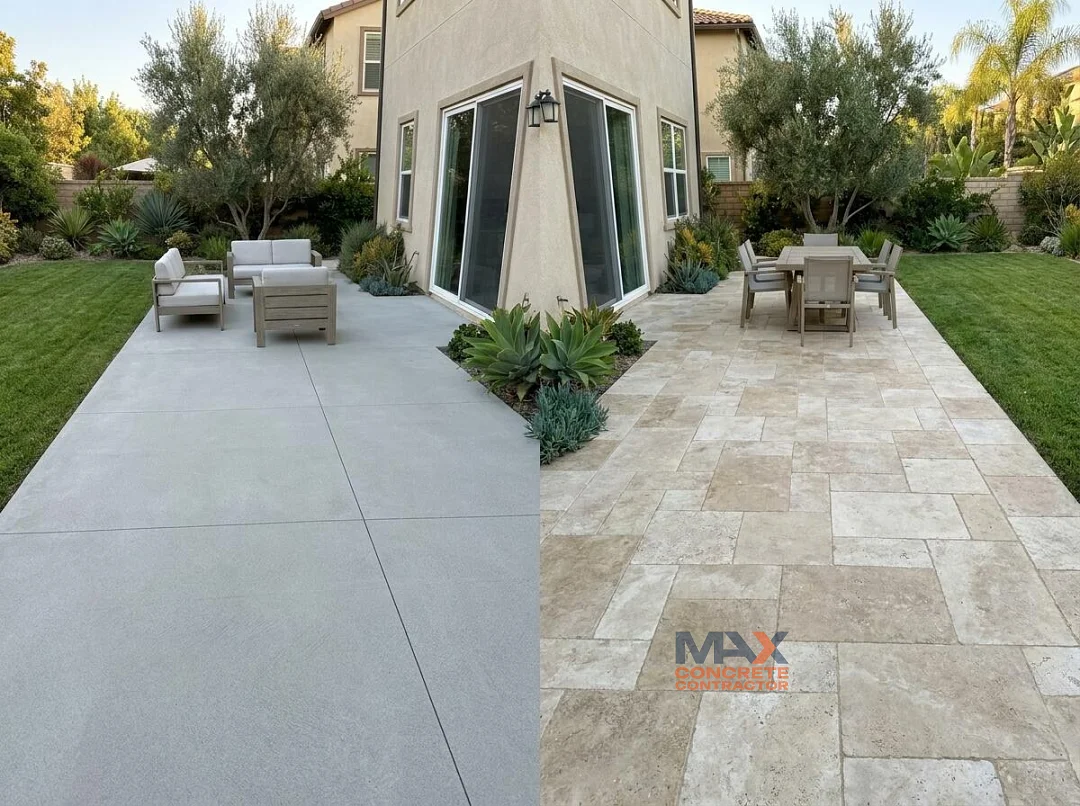
Travertine has a long history as a premium patio and pool-deck material, the same porous limestone that makes up much of the Colosseum in Rome, and it's genuinely earned its popularity in Southern California for one real reason: it stays noticeably cooler underfoot in direct sun than concrete or pavers, which matters a lot barefoot around a pool. That's not marketing, it's just how a naturally porous stone behaves thermally.
The trade-off is maintenance. Travertine's porosity that keeps it cool is the same quality that lets pool chemicals, sunscreen oil, and hard water minerals stain it if it isn't sealed on a regular schedule, typically every one to three years depending on exposure. It's also a natural stone cut into tiles, which means edges and corners are more prone to chipping than a continuous poured surface, especially in high-traffic areas near pool steps or furniture. Pavers, whether concrete or clay, come with their own separate issue:
- They sit on a sand or gravel base that shifts over time
- This eventually means uneven tiles, weed growth in the joints, and periodic re-sanding to keep the surface level
A concrete patio sidesteps both of those maintenance cycles. It's a single continuous slab, so there's no joint sand to erode and no individual tile to crack loose. Sealing is still recommended, roughly every two to three years, but it's a straightforward reapplication rather than the more involved resealing travertine needs to stay stain-resistant. And with a stamped or exposed-aggregate finish, a concrete patio can visually get close to a travertine or natural-stone look without the chip risk or the ongoing sealing schedule that comes with the real thing.
None of this means travertine or pavers are the wrong choice, plenty of pool decks genuinely benefit from that cooler surface. But for homeowners weighing decades of upkeep against upfront look, concrete usually wins on total cost and durability, while still leaving room to imitate the finish they liked in the first place.