Sealing vs Staining: Two Different Jobs That Often Get Confused
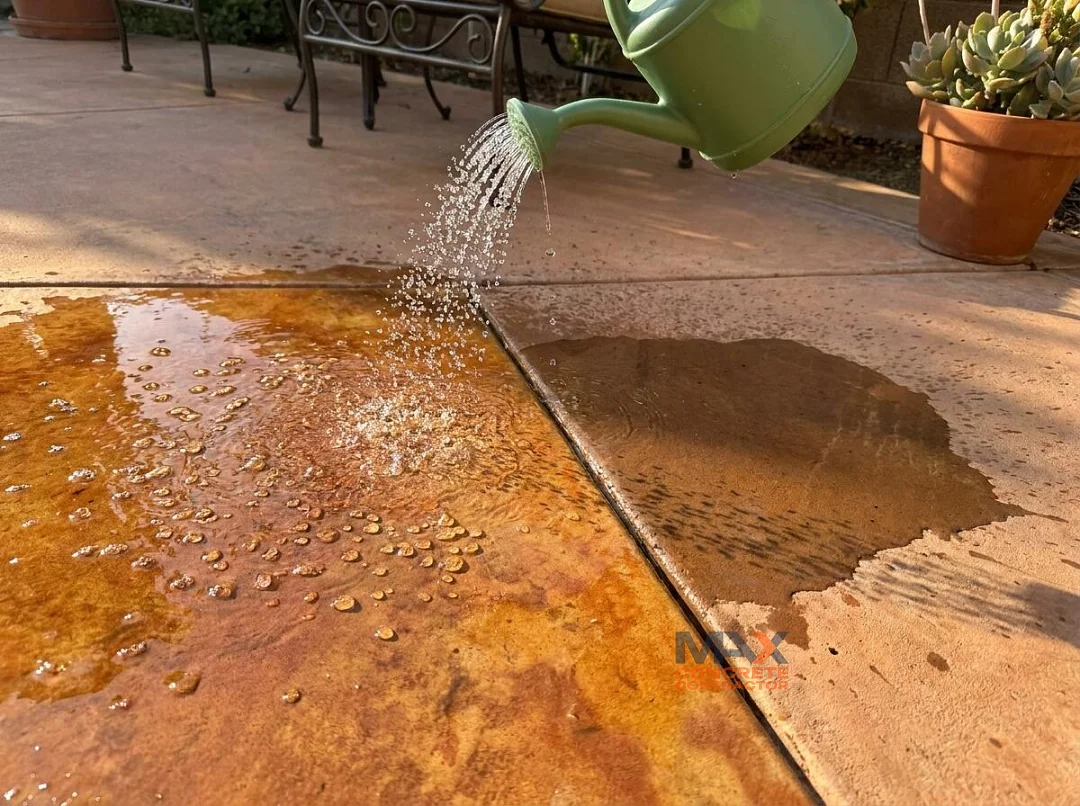
These terms get used almost interchangeably by homeowners, but they describe two entirely different processes with different goals. Staining changes the color of the concrete itself. An acid stain reacts chemically with the minerals in the slab to produce permanent, variegated color, while a water-based stain works more like a penetrating dye. Either way, staining is about appearance: turning plain gray concrete into something with tone, depth, and character.
Sealing does something different entirely. A sealer is a protective layer, whether it soaks into the concrete or forms a thin film on top, that shields whatever finish is already there, stained, stamped, exposed aggregate, or plain gray, from water intrusion, UV fading, oil stains, and everyday abrasion. A sealer on its own doesn't fundamentally change the concrete's color the way a stain does, though some sealers do add a slight tint or a wet, enhanced look to whatever color is already present.
In practice, these two processes almost always work together rather than as alternatives:
- Staining without sealing leaves the color exposed and vulnerable to fading and staining from spills
- Sealing plain, unstained concrete protects it but doesn't add any color to begin with
For a stained driveway, patio, or stamped surface, the sealer typically goes on last, locking in and often deepening the stain color while adding the actual long-term protection that keeps that color looking good for years instead of fading within one summer.
How Well Does Sealer Hold Up in Irvine's Heat, and How Often Does It Need Recoating
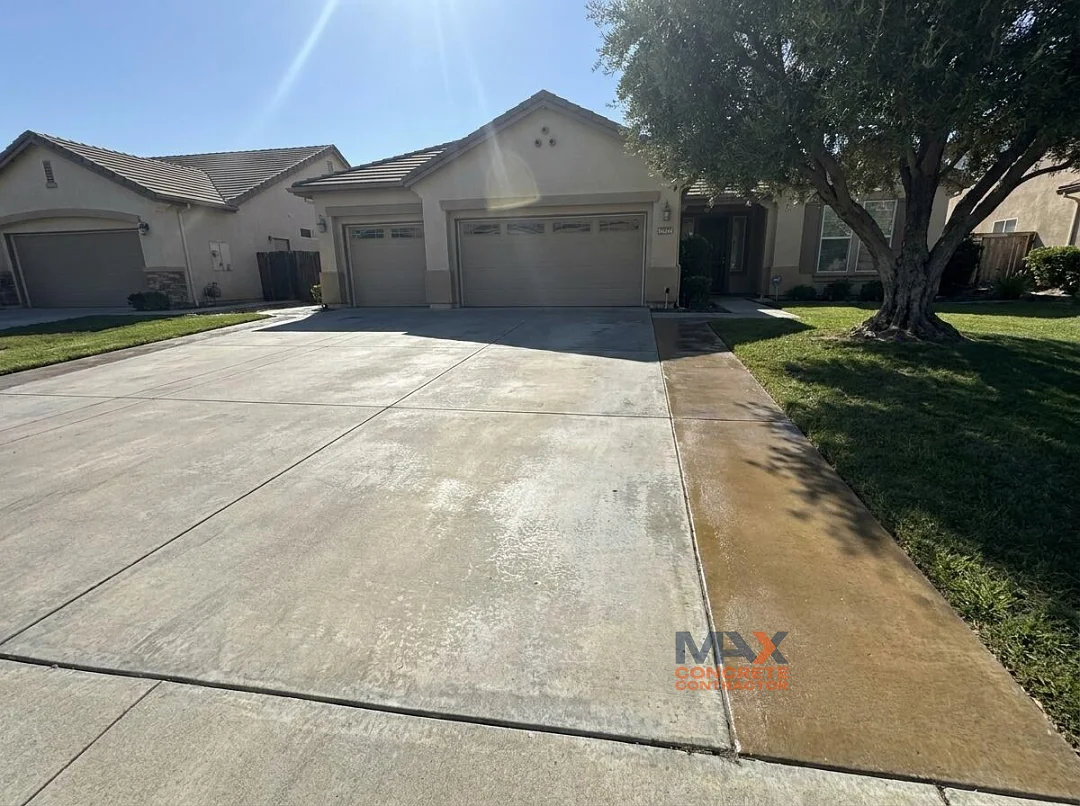
Southern California's near-constant sun exposure is exactly the condition that determines how long a sealer actually lasts, and the type of sealer matters more than the brand or price point. Acrylic sealers, the film-forming type that sit on top of the concrete and give that classic wet, glossy look, are the most common choice, but they're also the most vulnerable to UV degradation since the protective layer is fully exposed to direct sunlight. In a hot, sun-heavy climate, acrylic sealers typically need recoating every one to three years, sometimes closer to the one-year mark on a driveway that gets full sun most of the day.
Penetrating sealers behave differently because the protective barrier soaks into the concrete's pores rather than sitting exposed on the surface, which shields it from most of that UV breakdown. These typically last five to ten years before needing another application, a meaningful difference for anyone who'd rather not think about resealing every couple of summers. The trade-off is usually appearance: penetrating sealers don't produce the same glossy sheen an acrylic film does, so the choice often comes down to whether the priority is a decorative wet look or long-term, low-maintenance protection.
Whichever type is used, a few habits extend its life regardless:
- Rinsing off dirt and debris regularly
- Avoiding harsh chemical cleaners that can break down the sealer prematurely
- Watching for the first signs of wear rather than waiting until the concrete is visibly unprotected before scheduling a recoat
What Actually Goes Into Applying a Concrete Sealer
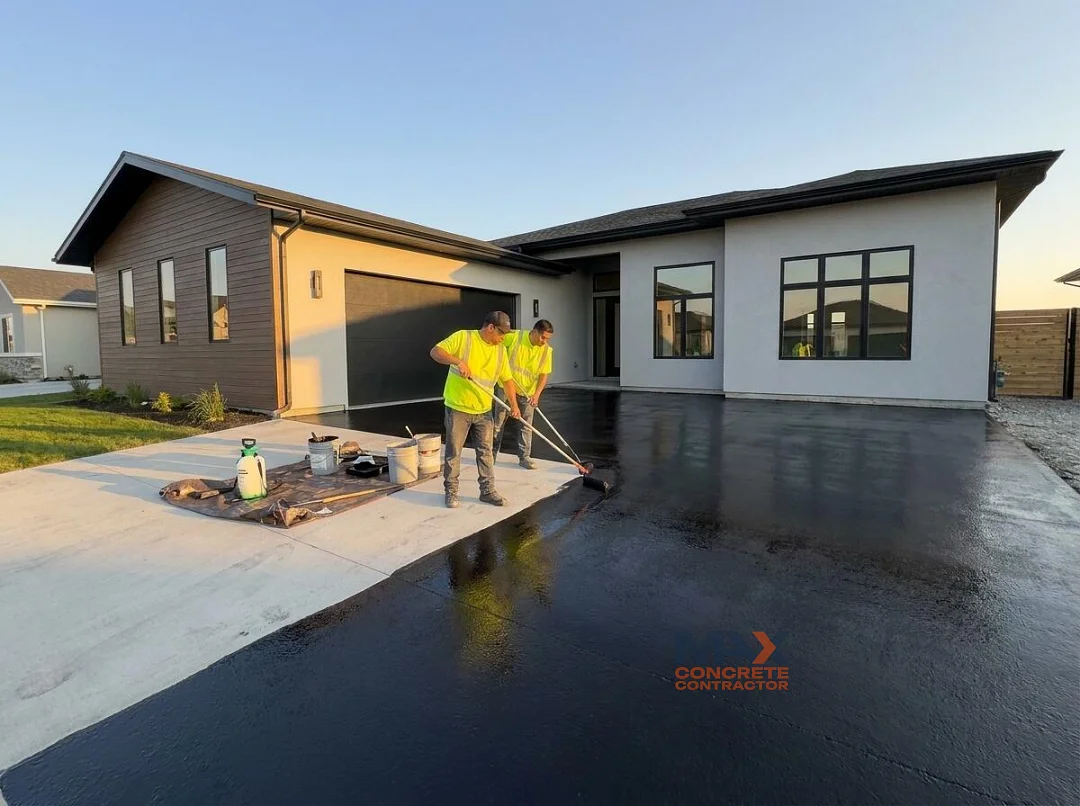
Sealing looks simple from the outside, roll or spray something clear onto a slab, but getting it right involves more prep and more precision than that description suggests. The concrete first has to be thoroughly cleaned, typically pressure washed to remove dirt, oil residue, and any old, failing sealer, since sealing over contamination just traps the problem underneath a fresh coat. In some cases, a light mechanical profile or acid etch is needed to open the surface enough for a penetrating sealer to actually absorb rather than sit on top and streak.
Timing and weather matter just as much as surface prep. Sealer generally can't be applied in direct, intense sun or when the slab surface is too hot, since it can flash-dry too quickly and leave visible lap marks or an uneven finish. It also needs a dry weather window afterward, applying right before rain, or in Southern California's case, right before an irrigation cycle hits the edge of a driveway, can ruin a fresh coat before it's cured. Most jobs go on in thin, even multiple coats rather than one heavy application, since over-applying sealer is one of the most common mistakes: it traps moisture underneath, leading to a hazy, whitish discoloration called blushing that has to be stripped and redone rather than just recoated.
Between the cleaning, prep, weather timing, and correct application technique, sealing a driveway or patio properly is realistically a half-day to full-day job for a professional crew working carefully, not the quick weekend task the finished product might suggest.
Signs Your Concrete Sealer Has Worn Out
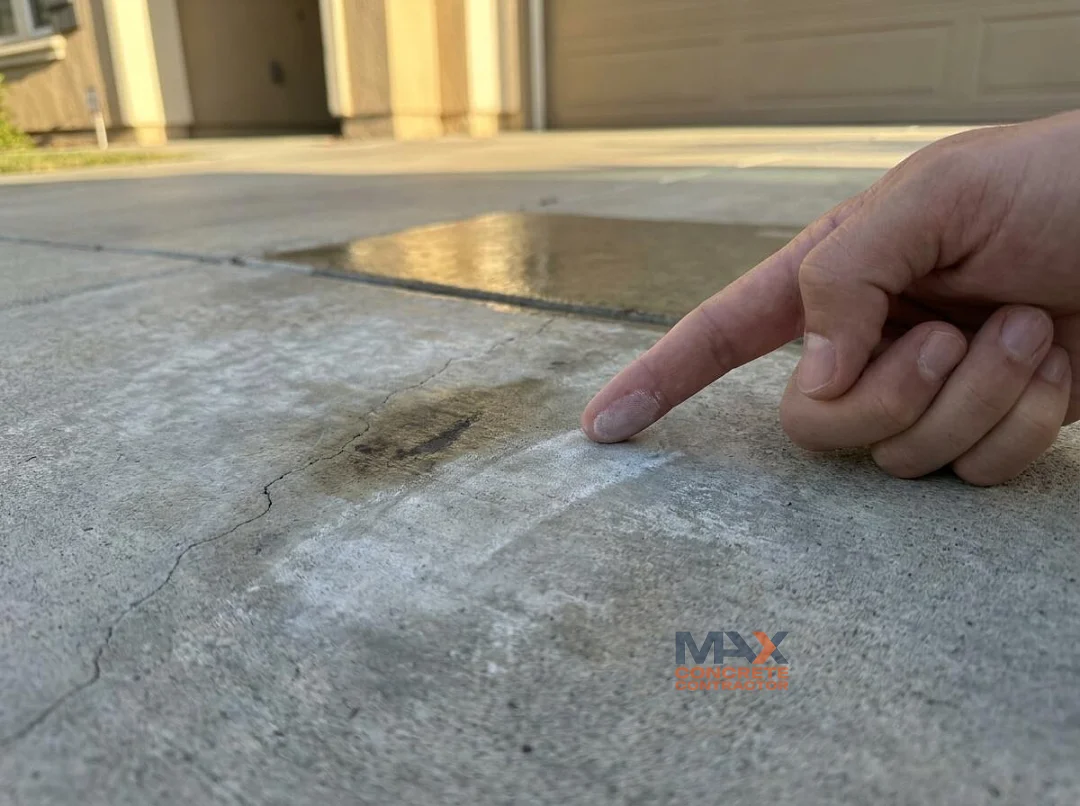
Sealer failure rarely announces itself with an obvious moment, it fades in gradually enough that a lot of homeowners don't notice until real damage has already started underneath. The simplest test is also the most reliable: pour a small amount of water on the surface. On properly sealed concrete, water beads up and sits on top. If it soaks in and darkens the concrete instead, the sealer has worn through in that spot, even if the surface still looks fine to the eye.
Visually, a few other signs show up before that point:
- A glossy acrylic sealer starts looking dull or cloudy instead of reflective, sometimes with a slightly chalky residue that rubs off on a finger when touched
- Color on a stained or stamped surface starts looking faded or washed out in high-traffic or full-sun areas first, since that's where UV exposure and foot traffic combine to wear through the protective layer fastest
- Small hairline cracks that weren't there before
- A driveway that starts noticeably staining from oil drips or tire marks it used to shrug off
Catching these signs early matters because resealing worn concrete is a straightforward maintenance task. Waiting until water has been soaking in for a season or two turns it into a bigger job: stains, minor surface pitting, and cracking all get harder and more expensive to correct the longer bare, unprotected concrete is left exposed to Southern California's sun and irrigation cycles.
Why DIY Sealer Application Goes Wrong More Often Than It Should
Sealer is sold at nearly every hardware store, which makes it look like an easy weekend project, but a surprising number of DIY sealing jobs end up needing professional correction within the first year. The most common failure is blushing, that hazy white discoloration that shows up when sealer is applied too thick, or when moisture gets trapped underneath before it fully cures. Once blushing sets in, there's no simple fix, the failed sealer usually has to be stripped off entirely and reapplied correctly, which costs more than doing it right the first time would have.
The other common mistake is using the wrong sealer type for the surface entirely:
- A high-gloss acrylic sealer applied to a polished concrete floor can actually dull the natural shine that polishing was meant to create
- A penetrating sealer applied where a decorative, glossy look was actually wanted leaves a homeowner disappointed with a nearly invisible result
- Applying sealer in direct midday sun, which is easy to do without realizing the timing matters, causes uneven drying and visible lap marks that stay visible for the life of that coat
None of these mistakes are really about a lack of effort, they're about not knowing the specific product chemistry and timing that a professional deals with regularly. For a small area like a single step or an entryway accent, DIY sealing is a reasonable low-risk project. For a full driveway or patio, where a mistake means redoing the entire surface rather than a small patch, it's usually worth the cost of having it done correctly the first time.