Acid Stain vs Water-Based Stain: Two Completely Different Chemical Processes
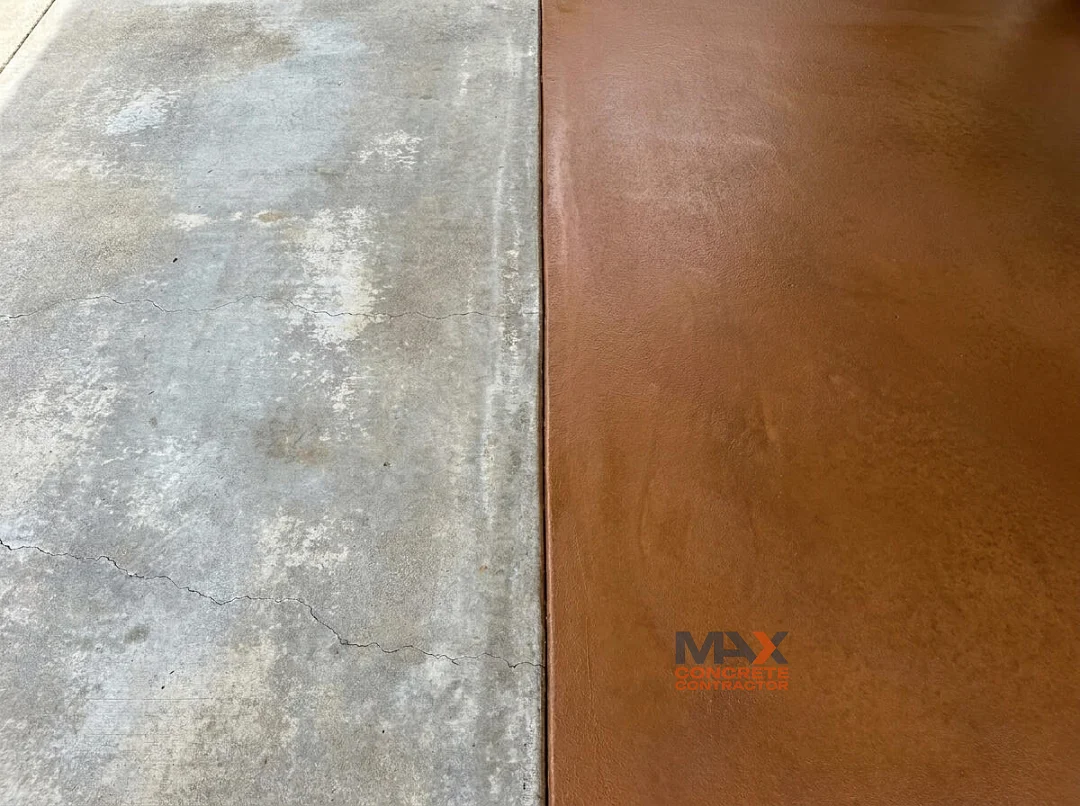
These two products are often shown side by side as a simple style choice, but they actually work on completely different principles. Acid stain contains metallic salts, commonly iron chloride, copper sulfate, or cobalt chloride, dissolved in a mild hydrochloric acid solution. When it's applied, the acid opens the concrete's pores and reacts directly with the free lime, the calcium hydroxide left over from the curing process, forming new insoluble mineral compounds embedded right into the surface. That reaction typically takes 4 to 24 hours to fully complete, and once it's spent, the color is genuinely part of the concrete itself, not a coating sitting on top of it.
Water-based stain works more like a pigmented dye. It penetrates the concrete's pores and gets held in place by a binder rather than reacting chemically with the slab, which means the color sits in the surface without becoming a mineral part of it. This has real practical consequences for both palette and predictability:
- Acid stain depends on a chemical reaction rather than added pigment, so its color range is naturally limited to earth tones, browns, tans, terracottas, blue-greens, and the result tends to come out mottled and variegated, genuinely unique to that specific slab's mineral makeup
- Water-based stain, using iron oxide pigments instead, offers a far wider color range, including tones acid stain simply can't produce, and the color reads as more uniform and predictable across the whole surface
Staining Existing Concrete vs Adding Color at the Time of the Pour
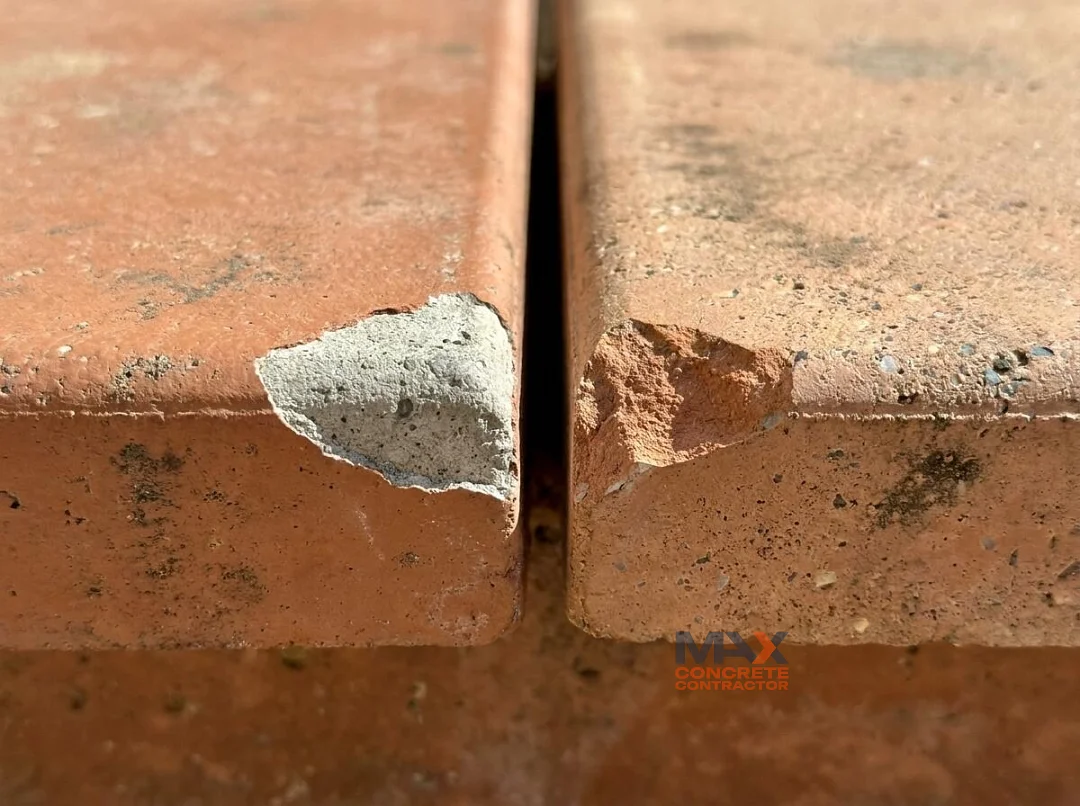
A driveway or patio that's already poured isn't locked into staying plain gray forever. Both acid and water-based stains can be applied to existing, cured concrete, which is exactly why staining is such a popular way to update an older surface without tearing it out. The concrete does need to be bare and porous for either stain to actually take, though. An existing sealer, paint, or coating has to be fully stripped first, since stain can't react with or penetrate through a layer that's already sitting on the surface.
It's worth being honest about what staining can and can't fix. It adds color and depth beautifully, but it isn't a way to hide significant surface damage. Existing oil stains, patch repairs, or areas where the concrete was troweled unusually hard and dense can all absorb stain unevenly, showing through the new color rather than disappearing underneath it. A contractor should walk the surface and flag these issues honestly before staining begins, rather than promising a flawless result on a slab with real underlying problems.
The alternative, adding integral color directly at the batch plant before the concrete is even poured, produces a completely uniform color running all the way through the slab rather than just on the surface, which means a chip or deep scratch doesn't reveal a different color underneath. The trade-off is that integral color has to be decided before the pour happens and offers a more limited, flatter color range than what layered staining can achieve. For new construction where the color decision is made early, integral color is a strong option. For an existing driveway or patio that already exists, staining is really the only path forward.
Design Techniques That Go Beyond a Single Flat Color
Staining opens up a lot more creative range than picking one color and rolling it on evenly. Layering two or more stain colors, applying a base tone first and then working a second, darker color into specific areas, is what produces the deep, variegated look often associated with high-end stained concrete, closer to natural stone than a painted surface. Because acid stain's chemical reaction is somewhat unpredictable by nature, experienced installers actually use that variability intentionally, working the stain in a way that mimics the natural veining and shading found in real stone or marble.
Saw-cut patterns add another layer of design entirely. Cutting shallow score lines into the concrete before or after staining creates the visual effect of individual tiles or pavers, sometimes combined with a border of a different stain color to frame the field, all on one continuous, jointless slab. This faux-tile approach is a common way to get a high-end, segmented look on a patio or entryway without any of the actual joints, sand base, or long-term maintenance that real tile or pavers would require.
Stencils and masking are the third major technique, used to create sharp geometric borders, medallions, or defined color zones rather than the organic, flowing look of layered staining. Combined, these techniques are why two stained concrete patios can look completely different from each other despite starting from the exact same base material.
Does Stained Concrete Actually Fade Over Time?
The honest answer depends on which type of stain was used, and understanding the difference clears up a lot of confusion. Acid stain's color comes from an actual chemical reaction with the concrete itself, so once that reaction completes, the color is permanently part of the slab. It doesn't peel, chip, or wear away the way a coating would, because there's no separate layer to wear through, the color is the concrete's own surface chemistry.
What does fade, and this is where the confusion usually comes from, is the sealer sitting on top of the stain. A sealer protects the stain color from UV exposure and everyday wear, and like any sealer, it degrades gradually under Southern California's sun, typically needing recoating every one to three years for a film-forming acrylic sealer, longer for a penetrating type. As that sealer wears thin, the stain color underneath can start looking dull, chalky, or washed out, even though the actual stain reaction hasn't gone anywhere. Reseal the surface, and that vibrancy typically comes right back, because the color was never actually fading, the protective layer above it was.
Water-based stain is a bit more sealer-dependent by comparison, since its pigment isn't chemically bonded to the concrete the same way. Without a well-maintained sealer, water-based stain color can genuinely fade over time in direct sun, not just look dull. This is really the practical argument for treating sealing as an ongoing part of stained concrete maintenance, not a one-time step that's finished once the project wraps up.
Where Stained Concrete Makes the Most Sense
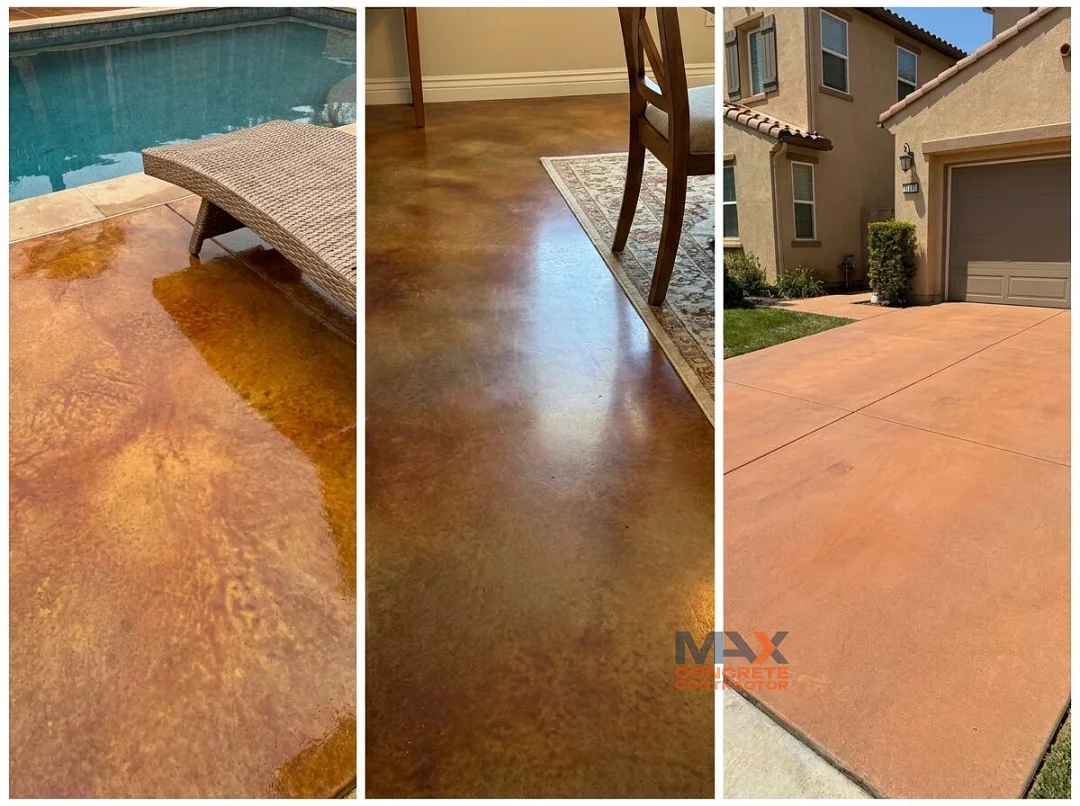
Stained concrete shows up in more places than most homeowners initially consider, and the right technique often depends on the specific setting:
- Patios and pool decks are natural fits, since the mottled, stone-like look of acid stain pairs well with the kind of resort-style outdoor space a lot of Irvine backyards are designed around, and staining handles the heat and sun exposure of an exterior surface without issue when properly sealed
- Driveways can absolutely be stained too, though the finish needs to prioritize slip resistance in the sealer, since a glossy stained surface without the right additive gets genuinely slick when wet
- Interior floors are where staining actually got a lot of its reputation, particularly paired with concrete polishing, an acid-stained and polished concrete floor is a common look in modern homes, retail spaces, and restaurants, since it gets the variegated stone appearance without the cost or maintenance of real natural stone flooring
Indoors, there's no UV exposure to worry about, so a stained and properly sealed interior floor tends to hold its color and sheen even longer than an exterior application exposed to daily sun.
The common thread across all of these applications is that staining works best as one part of a larger system, the right prep, the right stain technique for the setting, and consistent resealing, rather than a single step that's finished the day the color goes on.