What Is a Driveway Approach, and Why Is It Treated Differently From the Rest of the Driveway
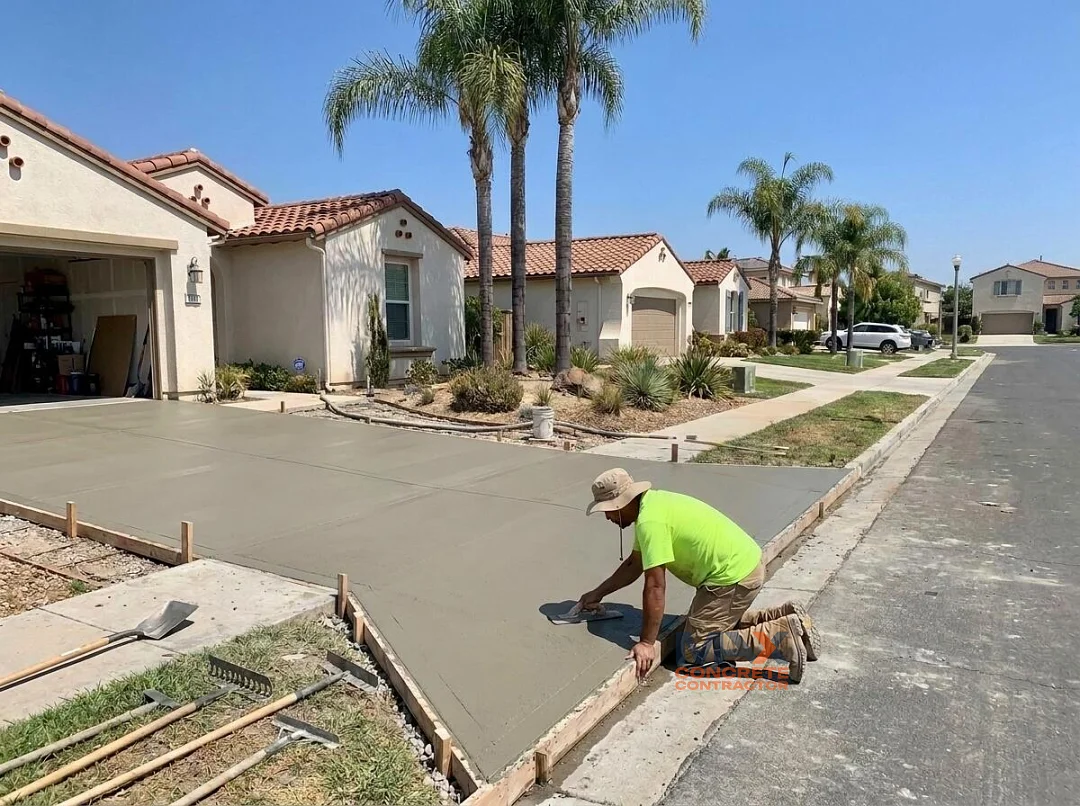
Most homeowners think of their driveway as one continuous piece of concrete, but legally and structurally, it's actually two separate things. The driveway approach is the specific section that sits within the public right-of-way, running from the street curb to the property line, and it belongs to a different jurisdiction than the rest of the driveway sitting on private property beyond that line. Everything past the property line is yours to maintain and modify freely. The approach itself is technically city infrastructure, even though it looks and functions like a normal part of the driveway.
This distinction matters the moment any repair or replacement work starts. Because the approach sits in the public right-of-way, it has to be built to municipal engineering specifications rather than general residential driveway standards, and altering it without going through the proper process can create real problems later, including:
- Failed home inspections at resale
- Liability if the transition area causes an accident
Understanding that the approach and the rest of the driveway are governed by different rules is really the first thing to know before starting either a repair or a full replacement project.
The Permit Process for Driveway Approach Work in Irvine
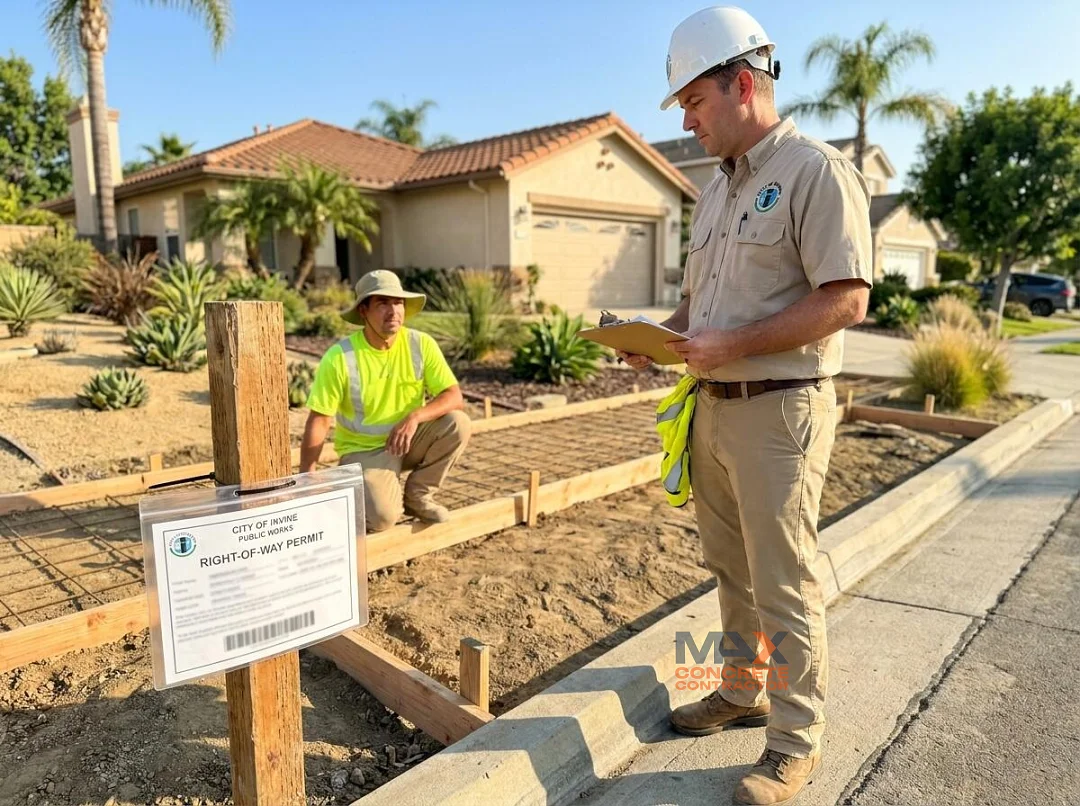
Because the approach sits in the public right-of-way, replacing or repairing it requires a right-of-way permit from the City of Irvine before any demolition begins, a step that a purely private driveway repair further back on the property typically doesn't need. This isn't just paperwork for its own sake. The city's engineering standards specify things like:
- Minimum concrete strength
- Slab thickness
- Reinforcement for the approach section specifically
since it has to hold up to the same traffic loads as the adjacent street, not just a homeowner's personal vehicles.
This is also the main reason approach work tends to cost more per square foot than an equivalent stretch of private driveway. The permit itself, the required inspections at forming and pour stages, and building to a city specification rather than a general residential standard all add real time and cost that a straightforward private pour doesn't carry. A contractor experienced with approach work handles this coordination directly with the city's building and public works departments, submitting the permit, scheduling inspections, and making sure the finished work actually passes before it's considered complete, rather than leaving a homeowner to navigate that process alone partway through a project.
When Does a Driveway Approach Need Full Replacement Instead of Repair
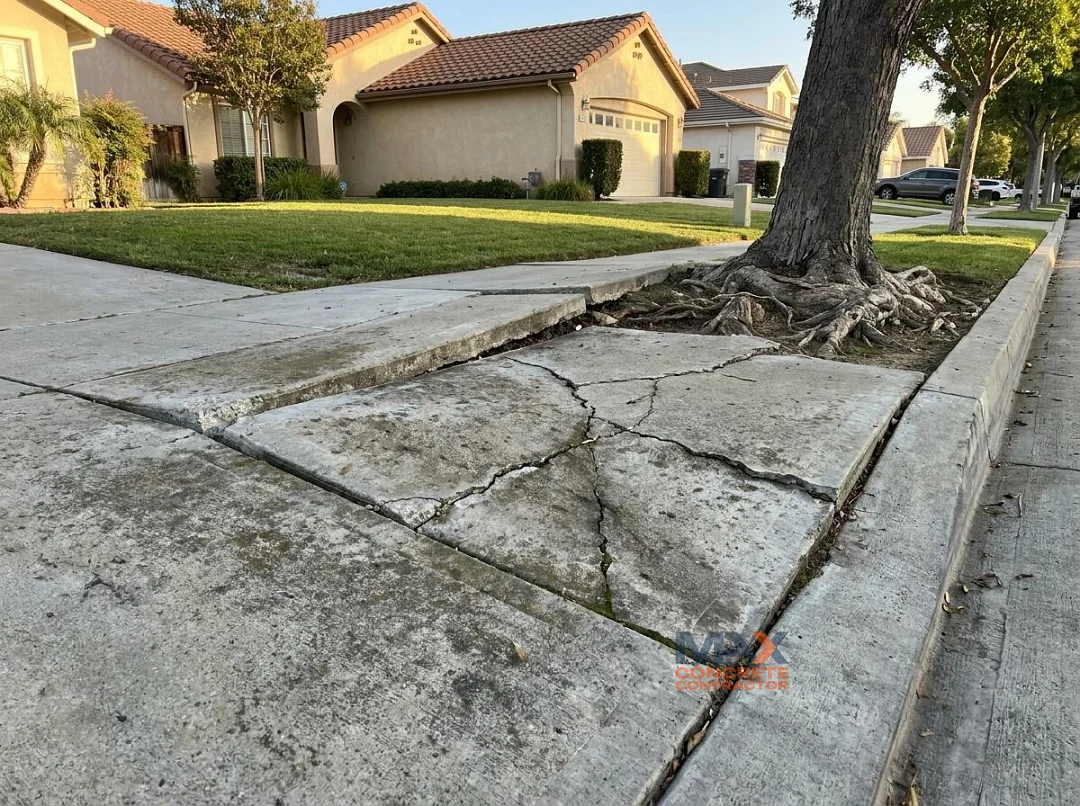
The most common reason an approach fails isn't traffic wear, it's the street tree planted a few feet away in the parkway strip. Mature street trees send roots directly under the approach looking for water, and there's rarely enough soil depth there to stop them, which means a lifted, heaved, or badly cracked approach right at the curb is one of the most frequent repair calls in established neighborhoods with mature landscaping. A single heaved panel can sometimes be cut out and repoured on its own, but if the root causing it is still active and growing, that same panel will often lift again within a few years unless the root itself is addressed or a barrier is installed.
Beyond tree root damage, a few signs point to needing full replacement rather than a patch:
- Real settling
- Multiple large cracks running through the slab
- A noticeable dip where the approach meets the street
In those cases, full replacement of the approach section makes more sense than an isolated repair, since the underlying base has likely failed more broadly than just the visible cracks suggest. A contractor should be honest about which situation applies rather than defaulting to the cheaper patch option when the underlying problem is going to resurface within a season or two anyway.
The Accessibility Rule Most Homeowners Never Notice
There's a detail in accessibility design standards that shapes how a driveway approach is actually built where it crosses the sidewalk, and it's one almost nobody notices until it's pointed out. Federal accessibility guidelines require a flat, level pedestrian zone, at least three feet wide with a cross slope no steeper than about 2 percent, to run continuously across the driveway approach where it intersects the sidewalk. In practice, this means the sidewalk itself shouldn't tilt downward to match the driveway's slope as it crosses. Instead, the driveway apron is designed to dip and rise around a level strip that keeps the pedestrian path flat and safe for wheelchairs, strollers, and anyone with mobility challenges.
This is exactly why a properly engineered approach replacement looks a certain way when you actually study the grading: there's a subtle but deliberate flat band running through the sidewalk crossing, distinct from the sloped sections on either side leading down to the street and up to the property line. Getting this grading wrong isn't just a code violation on paper, it's a real accessibility problem for anyone using the sidewalk in a wheelchair or with a stroller, which is one more reason approach work benefits from a contractor who understands these standards rather than someone simply matching the existing slope by eye.
Matching Concrete Between the Approach and the Rest of the Driveway
When only the approach section needs replacing, matching it to the existing private driveway is worth thinking through before the pour, not after. A few small differences can leave a visible seam between old and new:
- A slightly different concrete mix
- A different broom texture
- Concrete poured at a different time
Any of these can leave a visible seam and color difference between the new approach and the older driveway behind it, even though structurally both sections are sound. A contractor who plans ahead can match the finish technique and, where possible, the timing and mix design closely enough that the transition isn't an eyesore.
There's also a practical cost argument for combining the two projects rather than doing them separately. Once a crew is mobilized, permits are pulled, and forms are being built for the approach section, extending that same effort to repour an aging private driveway at the same time is usually far more efficient than paying for two separate mobilizations months or years apart. For anyone who knows their private driveway is getting close to needing replacement anyway, timing it alongside a required approach repair, rather than treating them as two unrelated projects, is often the more cost-effective path, and it avoids ending up with a brand-new approach section bolted onto a driveway that's visibly reaching the end of its own lifespan right next to it.