PSI, Thickness, and Mix Design: What Makes a Driveway Hold Up
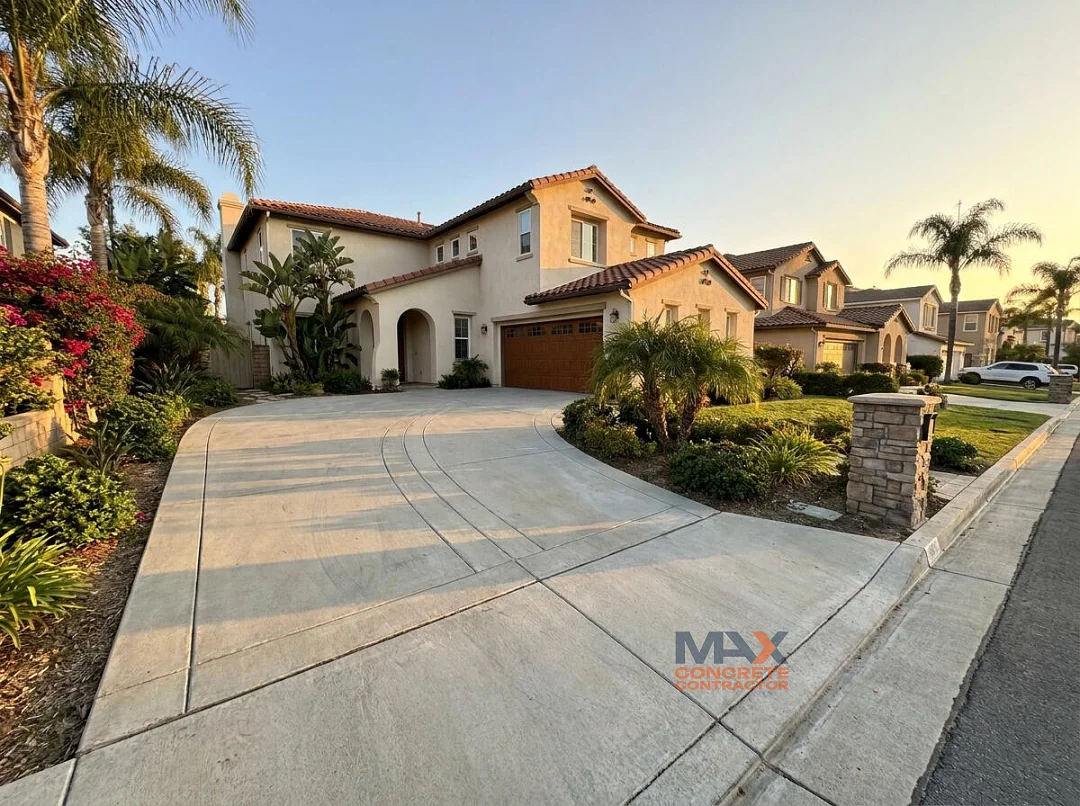
Selecting the correct concrete mix is the most important decision in any driveway installation. Around Irvine and the rest of Orange County, a licensed contractor typically recommends a structural mix rated between 3,000 and 4,000 PSI for a residential driveway. That strength matters here specifically because Southern California's expansive clay soils shift with the seasons, and a driveway also has to handle daily vehicle loads without stress-cracking. A properly engineered pour starts with the mix design: ready-mix Portland cement concrete is the standard, and adding fiber reinforcement or steel rebar/wire mesh gives the slab extra tensile strength, which is what actually keeps a driveway from cracking prematurely.
If you're weighing concrete against asphalt or pavers, longevity is where concrete pulls ahead. A well-built concrete driveway commonly lasts 25 to 30 years or more, and it needs far less upkeep along the way. Thickness matters too:
- Four inches is the minimum for standard passenger vehicles
- Five to six inches is the safer call if trucks, trailers, or an RV will regularly park on it
For a standard residential driveway, most contractors in Orange County will offer:
- Standard gray structural concrete
- Air-entrained concrete, useful at higher elevations with more freeze-thaw exposure
- Integrally colored concrete, for a stamped or stained finish
If you're considering a synthetic overlay instead, such as a polyaspartic coating or an epoxy flake system, make sure your contractor is qualified to handle both the structural slab and the decorative topcoat, since those are genuinely two different skill sets.
When you get a quote, ask directly about PSI rating, reinforcement type, and sub-base prep. These three things affect your driveway's lifespan more than almost anything else. Getting the mix right the first time is what separates a driveway that lasts three decades from one that needs patching in five years.
Concrete Driveway Finishes in Irvine, CA: Broom, Stamped, Exposed Aggregate and More
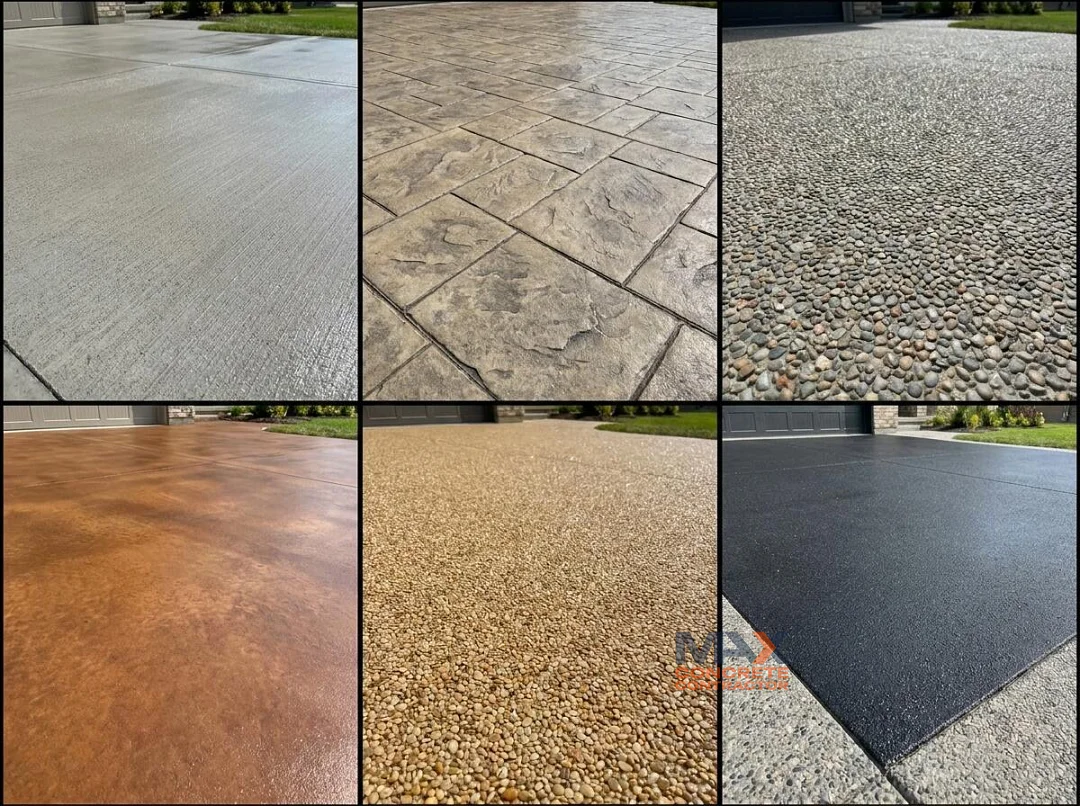
The finish you pick affects how your driveway looks and how it performs day to day. A broom finish is the most common and budget-friendly option: dragging a broom across the wet concrete creates a slightly textured surface that stays slip-resistant even during our rainy season, which matters on the sloped lots common throughout Irvine.
If curb appeal is the priority, decorative finishes turn a plain driveway into a design feature:
- Stamped concrete can imprint patterns that mimic natural stone, brick, or slate, giving you a paver-like look without the joints
- Stained concrete uses acid- or water-based color to add rich, permanent tone
- Exposed aggregate reveals the natural stone within the mix itself, which not only looks good but also hides everyday wear and tear better than a plain gray surface
Synthetic and resin systems have become popular alternatives too. A resin-bound surface, a polyaspartic coating, or an epoxy flake system all give you a seamless, UV-stable finish that resists oil stains far better than bare concrete. If drainage is a concern on your property, a turf-jointed grid driveway or a permeable surface can help meet stormwater requirements while still looking intentional rather than utilitarian.
Whether you're pouring a new driveway or resurfacing an old one, it's worth asking your contractor to walk you through broom finish, exposed aggregate, stamped concrete, and coating options side by side. The right choice depends as much on your home's style as on your budget.
Why Concrete Driveways Crack in Irvine, CA: Control Joints and Proper Maintenance
Concrete is strong under compression but weak under tension, so as it cures and shrinks, internal stress builds up. Around Irvine, that stress gets a boost from expansive clay soil, nearby tree roots, and seasonal moisture swings, all of which speed up cracking, settling, or heaving if the slab wasn't planned properly from the start. Preventing cracks at the design stage is always cheaper than repairing them later.
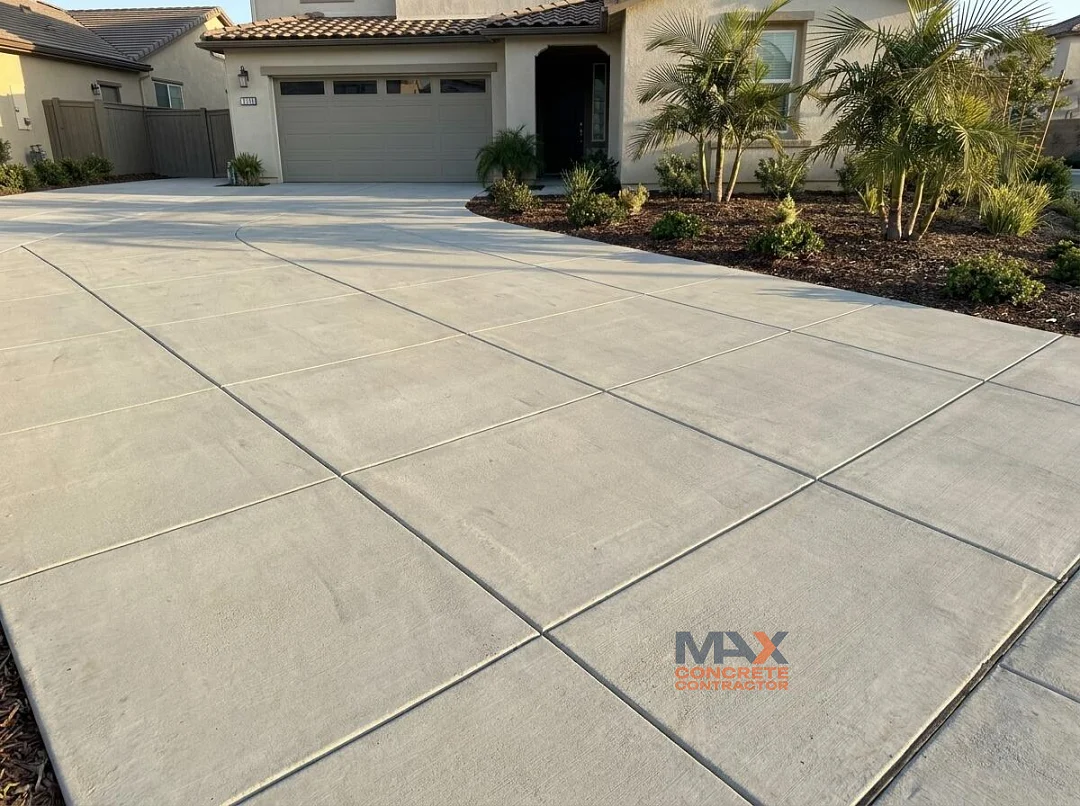
The main defense is the control joint, sometimes called a contraction joint. During installation, the crew cuts or tools these grooves at planned intervals so the slab has an intentional weak point to crack along, instead of cracking randomly across the surface. As a rule of thumb, joint spacing in feet should be roughly two to three times the slab's thickness in inches:
- A standard 4-inch driveway needs joints every 8 to 12 feet
- A thicker 6-inch slab can go 12 to 15 feet between joints
Get the spacing wrong, and even a well-mixed, well-reinforced slab will crack in the wrong places.
Once it's poured, a little maintenance goes a long way:
- Sealing the surface every two to three years protects against water intrusion and oil staining
- Resealing as the old coat wears off keeps that protection active
- Catching small cracks early and filling them stops them from spreading
- Keeping joints clear of weeds and debris protects the slab's structure over time
Minor surface cracks are usually a simple repair. But if you're seeing real settling, heaving, or a slab that's structurally failing, that's a sign the driveway needs replacing rather than patching. It's worth getting a second opinion from a contractor who can tell the difference.
Why Hire a Licensed Concrete Contractor in Irvine, CA: Insurance, Permits and Utility Safety
Choosing a licensed contractor is the single biggest decision you'll make for a driveway installation, replacement, or repair. Proper licensing means the contractor has demonstrated real, verifiable experience and is accountable to the state licensing board, something an unlicensed handyman crew simply can't offer, no matter how good their sample photos look.
Insurance matters just as much. A properly insured contractor carries general liability coverage and workers' compensation, so if something gets damaged or someone gets hurt on your property during the job, you're not the one left holding the bill. A lot of the cheapest "concrete company near me" results skip this coverage entirely, which is exactly how homeowners end up in expensive disputes. Before work starts, it's reasonable to ask to see a license number and proof of insurance.
Permits are the other piece people often overlook. Certain projects, especially replacing the driveway approach (the section that connects your driveway to the street), sit within the public right-of-way and require a permit from the City of Irvine before work begins. A contractor who handles this correctly deals directly with the city's building and public works departments so your project passes inspection without headaches later.
Underground safety is the last, and arguably most important, step. Before any digging or demolition, a responsible contractor calls 811 to reach DigAlert (Underground Service Alert of Southern California), which locates buried gas, water, electrical, and communication lines before anyone breaks ground. It's a free service, and skipping it is how driveways end up striking a gas line or knocking out someone's internet for a week.
Between licensing, insurance, permitting, and this one phone call, hiring the right contractor is what keeps your project safe from start to finish.
Concrete Driveway vs Pavers in Irvine, CA: Durability, Maintenance and Design
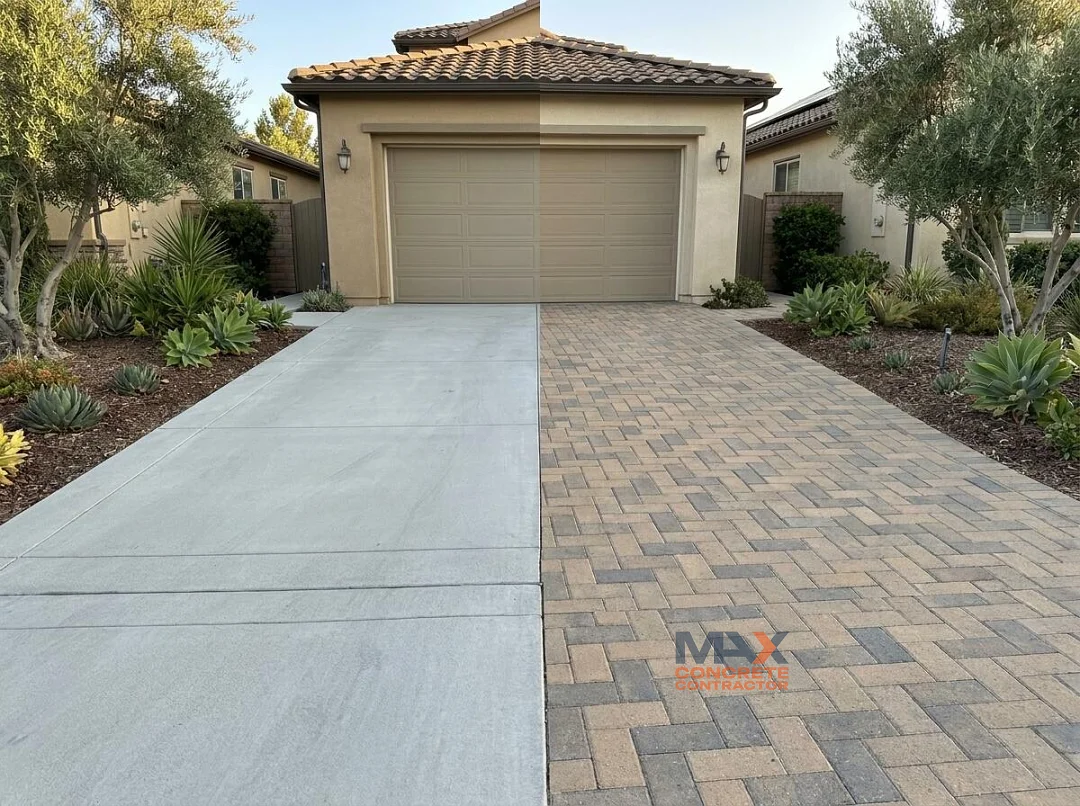
It's one of the most common questions homeowners bring up when comparing driveway materials: concrete or pavers? Pavers often get chosen first for their design flexibility, but a properly poured concrete slab usually wins out over the long run on durability, upkeep, and overall value.
Concrete is poured as one continuous slab, which gives it real structural strength and typically 25 to 30 years of service life. Pavers, by contrast, sit on a compacted sand or gravel base that can shift and settle over time, leading to an uneven surface. They also tend to grow weeds between the joints and need periodic re-sanding and releveling to stay looking sharp, maintenance that concrete simply doesn't require.
The design gap between the two has narrowed a lot, though:
- Stamped concrete can now replicate brick, cobblestone, or natural stone in almost any pattern you want
- Stained or exposed-aggregate finishes add color and texture without a single joint to maintain
- A polyaspartic or epoxy flake coating gives you a smooth, seamless modern look without the paver maintenance cycle
Cost-wise, concrete usually comes out ahead over the driveway's lifetime once you factor in paver upkeep. If you're deciding between the two, it's worth getting quotes for both a broom-finish or decorative concrete option and a paver install side by side. Most homeowners are surprised how close the design options end up, with concrete winning clearly on long-term maintenance.