Epoxy Flake Flooring vs Polyaspartic Coating: What's Actually Different
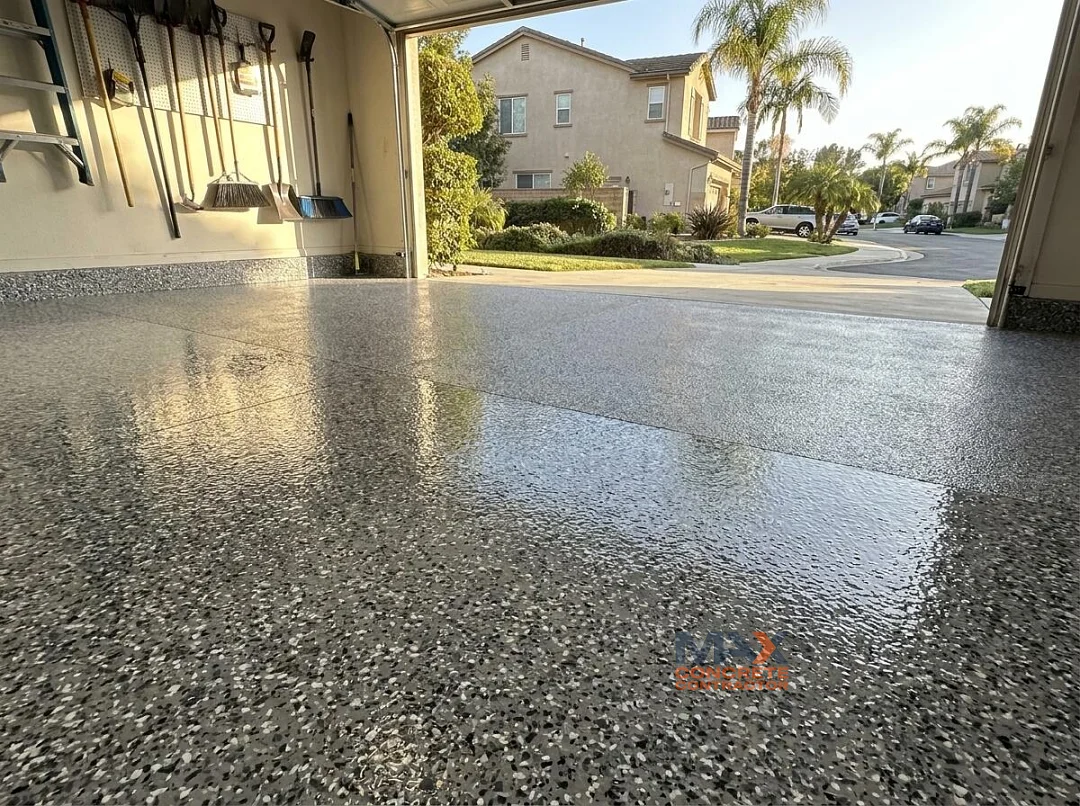
These two systems look similar on the surface, since both broadcast decorative vinyl flakes into a resin base, but the base material underneath the flakes is genuinely different, and that difference matters most at the transition between indoor and outdoor concrete. Epoxy is the traditional choice for garage floors: it self-levels well, bonds strongly to interior concrete, and has a longer working time that gives an installer more control over an even flake distribution. Polyaspartic cures far faster and holds up better under direct UV exposure, which is exactly why it's the more common choice for an actual driveway sitting in full sun.
Here's the good news for anyone wanting a garage floor that visually continues the same look as the driveway right outside it: yes, this is very achievable. The flakes themselves, the actual decorative chips creating the color pattern, are a separate component from the resin they're broadcast into, so the same flake color blend can be used in both an exterior polyaspartic driveway coating and an interior epoxy garage floor. Visually, the pattern reads as continuous even though the base resin technically differs. Many installers actually build the driveway with a polyaspartic base for UV stability and cap the interior garage floor with a polyaspartic topcoat over epoxy as well, so the two surfaces end up performing similarly despite starting from different base materials.
Does an Epoxy Flake Floor Off-Gas After It Cures?
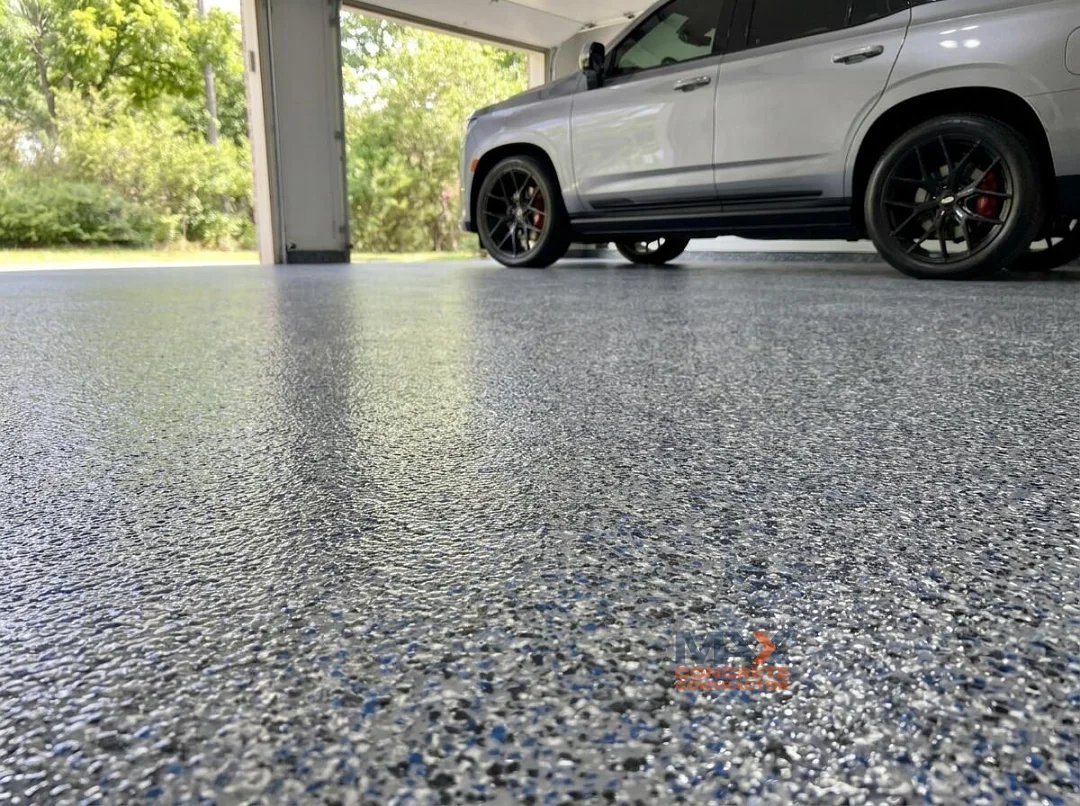
Once fully cured, no, not in any meaningful sense. Epoxy has a reputation for a strong chemical smell, and that reputation is earned, but it's specifically tied to the mixing and application phase, not the finished floor. While the two-part epoxy is being mixed and rolled out, it does release noticeable fumes, which is exactly why proper ventilation, and sometimes temporary evacuation of an attached living space, is standard practice during installation.
Modern professional-grade epoxy systems, particularly 100% solids formulations, have significantly lower VOC content than older solvent-heavy epoxies, which means less odor during application than what a lot of people remember from garage epoxy kits years ago. Once the resin fully cures, typically within a few days depending on the product and temperature, the floor is chemically stable and doesn't continue releasing anything into the air. There's no lingering smell, no ongoing off-gassing, and nothing that makes the space unsafe to spend time in once that initial curing window has passed.
Will an Epoxy Flake Floor Hold Up in the Heat, or Peel Off?
This is a legitimate concern, and it has a real name in the industry: hot tire pickup. It happens when a vehicle pulls into a garage with tires still hot from highway driving, softening the epoxy underneath, and then as the tires cool and contract, they literally grab and pull the coating up off the concrete. It's a well-documented failure mode, and it's almost always tied to one specific cause: thin, low-quality coatings.
The typical DIY epoxy kit sold at hardware stores is often only around 5 to 12 percent actual epoxy resin, with the rest made up largely of latex paint, which simply doesn't have the thickness or heat tolerance to survive repeated hot tire exposure. A professional 100% solids epoxy system, by contrast, is exactly what it sounds like: pure resin and hardener with nothing evaporating out during cure, building 10 to 20 mils of thickness per coat instead of a thin paint-like film. That thickness and density is what actually resists softening under a hot tire, and a properly prepped, professionally installed 100% solids system commonly holds up for 10 to 20 years or more under normal residential garage use without lifting.
Proper surface preparation matters just as much as the epoxy itself. Correctly profiling the concrete before application gives the coating a mechanical bond strong enough to resist that pulling force even under repeated heat cycling, which is really the combination, quality material plus quality prep, that separates a floor that lasts decades from one that starts peeling in the first summer.
Store-Bought Epoxy Kits vs a Professionally Installed System
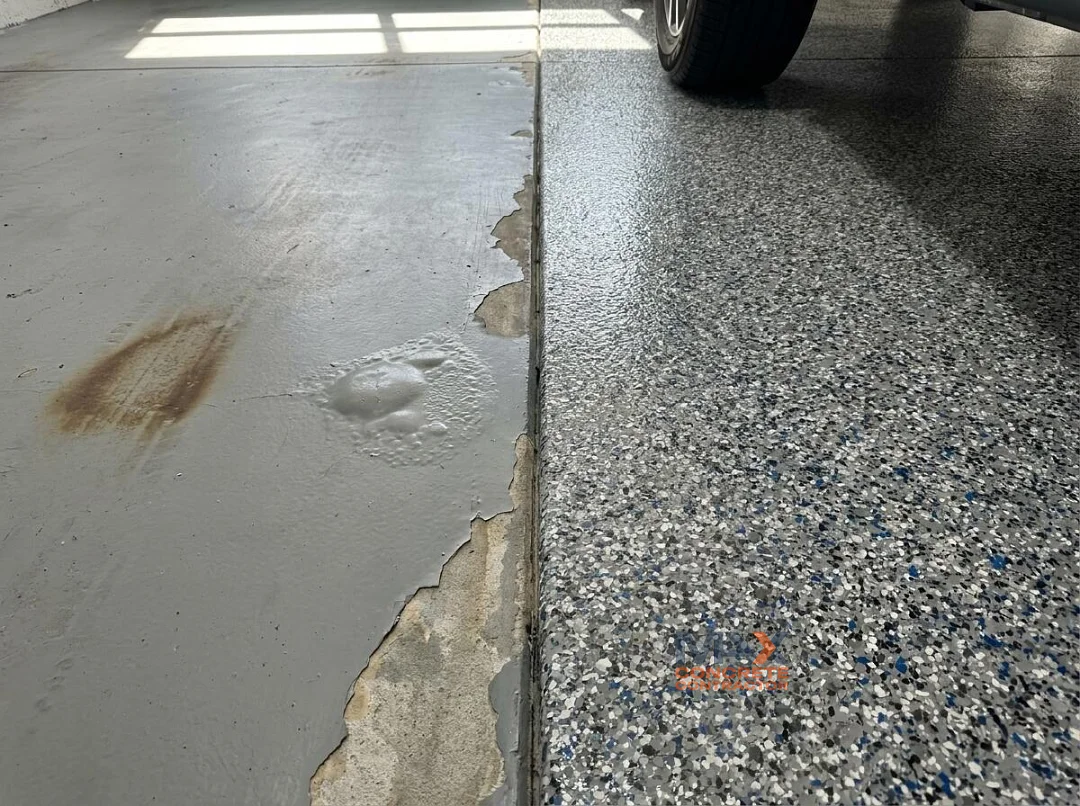
It's worth being direct about this, since it's the single biggest factor in how long an epoxy flake floor actually lasts: a $150 kit from a hardware store and a professionally installed epoxy flake system are not the same product wearing different price tags, they're genuinely different formulations. Most retail kits are thin, water-based coatings with a small percentage of actual epoxy resin, designed to be easy for a first-time DIYer to roll on in an afternoon. That ease of use comes at the cost of thickness, durability, and heat resistance.
A professional-grade system starts with real surface preparation:
- Mechanical grinding rather than a quick acid wash, which most DIY kits don't require or even mention
- A 100% solids epoxy base coat at a thickness a retail kit simply can't replicate
- A properly broadcast flake layer
- A durable topcoat, often polyaspartic for added UV and abrasion resistance
The result is a coating that resists hot tire pickup, chemical spills, and abrasion for well over a decade, versus a DIY kit that commonly shows peeling, bubbling, or discoloration within a year or two of regular use.
None of this means a DIY kit is a scam, it's simply built for a different purpose: light cosmetic improvement on a budget, not long-term performance under a daily-driver vehicle. For anyone planning to actually park a car on the floor for the next decade, the gap between the two products is real and shows up fast.
How to Take Care of an Epoxy Flake Floor Once It's Installed
A properly installed epoxy flake floor is genuinely low-maintenance, but low-maintenance isn't the same as no-maintenance, and a few habits make a real difference in how long it keeps its shine. Regular sweeping to clear grit before it gets ground into the surface under tires or foot traffic is the single easiest thing to stay on top of, since fine debris is what causes most of the surface scuffing people notice over time.
When it comes to actually cleaning the floor, plain water or a mild pH-neutral cleaner is usually all that's needed. Harsh cleaners, particularly ammonia-based products or anything strongly acidic, can dull the topcoat's gloss over repeated use, even though they won't damage the epoxy structurally right away. Degreasers are fine for the occasional oil or fluid spill, but they shouldn't be part of routine weekly cleaning. It's also worth avoiding parking a hot vehicle directly after a long highway drive when possible, letting tires cool for even a short window reduces the stress that leads to hot tire pickup over repeated cycles, even on a well-installed floor.
Beyond that, an epoxy flake floor mostly just holds up on its own. Unlike a bare concrete or plain sealed floor, there's no annual resealing schedule required, and the flake pattern does a good job of visually hiding the everyday wear that would show clearly on a solid-color surface. A quick clear topcoat refresh every several years, mainly to restore gloss rather than address any actual damage, is usually the only proactive maintenance worth scheduling.