Just How Complicated Is a Metallic Epoxy Floor to Create?
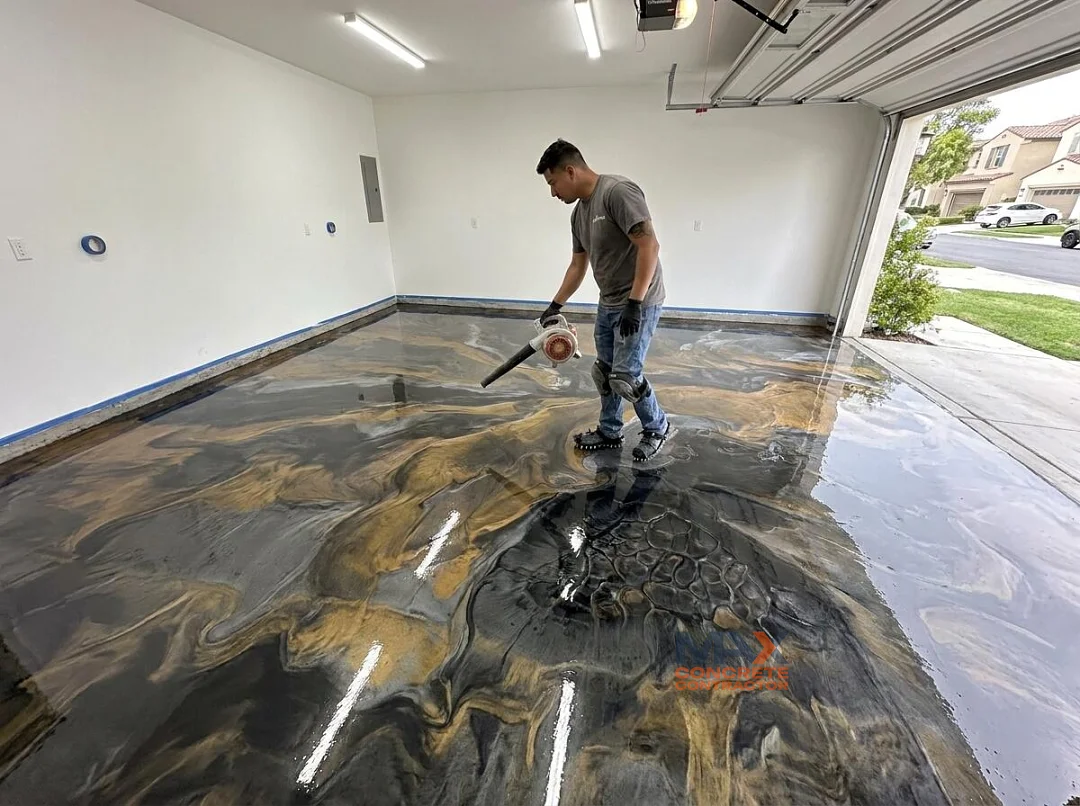
Genuinely complicated, and that's really the whole appeal. A metallic epoxy system is built in layers: a primer coat for adhesion, then a base coat where metallic mica-based pigments are mixed into clear epoxy and poured across the floor. That's where the real skill comes in. The mixture typically stays workable for only about 20 to 45 minutes before it starts setting, and within that window, the installer has to actively manipulate it with squeegees, rollers, sometimes even a leaf blower or air nozzle, to push the pigment into swirls, cells, and flowing patterns before it locks in place permanently.
Different tools and techniques produce different effects:
- A light pass with a squeegee creates broad, sweeping color movement
- Introducing small amounts of solvent, like denatured alcohol, in specific spots makes the pigment separate and shift, creating the look of flowing rivers or fractured, molten-metal texture
- Directed air from a blower can push pigment into rippling, wave-like patterns or dramatic circular "cells" that resemble craters
Every one of these techniques has to happen before that narrow pot life runs out, and overworking the surface, or trying to cover too large an area before the epoxy starts setting, is one of the most common ways an install goes wrong and the pattern turns muddy instead of dramatic.
Once the base layer cures, a clear topcoat locks in the pattern and adds durability. But the artistic part, the part that actually determines whether a floor looks like a showpiece or a mistake, all happens in that first 20 to 45 minutes, which is exactly why this isn't a coating most people should attempt as a first-time DIY project.
Metallic Epoxy vs Polyaspartic: Different Jobs, Often Used Together
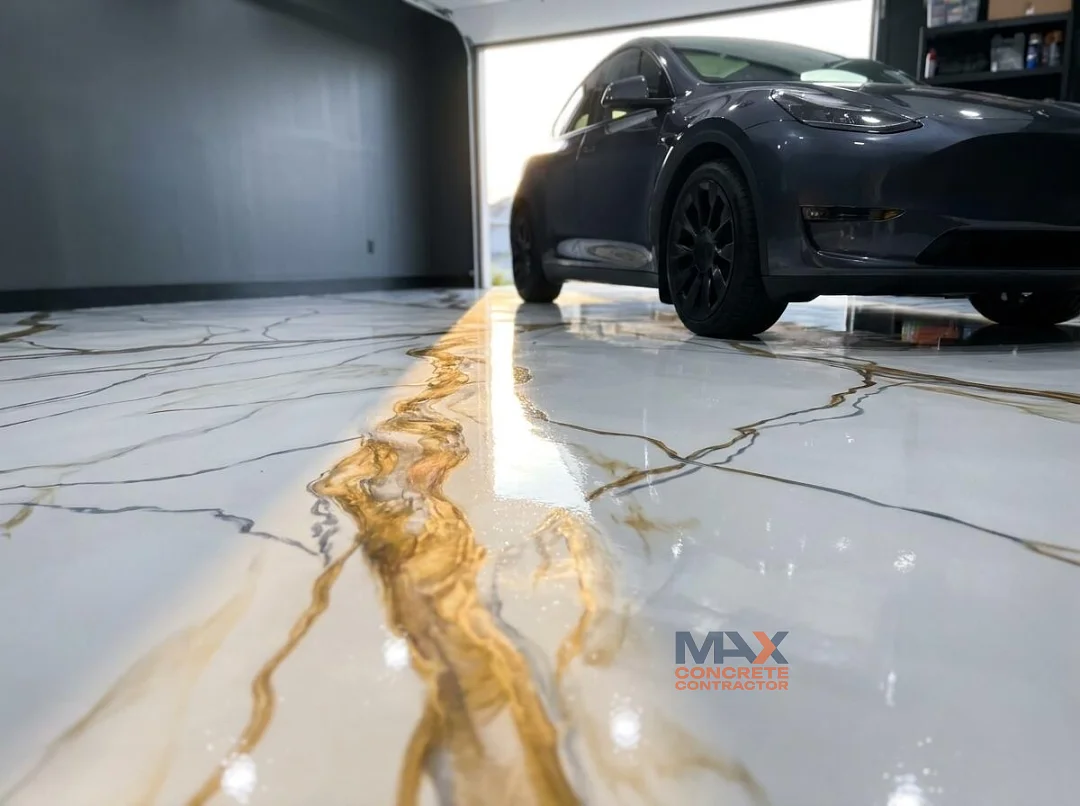
These two materials aren't really competing products, they solve different problems, and a lot of high-end floors actually use both. Metallic epoxy is prized for exactly the reason described above: its longer working time gives an installer room to manipulate pigment into a genuinely artistic, one-of-a-kind pattern. Polyaspartic, by contrast, cures in a fraction of the time, often tack-free within an hour or two, which makes it fantastic for fast turnaround jobs but leaves almost no window to manipulate a metallic effect before it sets.
The trade-off is UV stability:
- Standard epoxy tends to yellow and dull under prolonged sun exposure, fine in an indoor garage but a real problem on anything left outdoors long-term
- Polyaspartic doesn't have that weakness, it stays clear and UV-stable for years in direct sunlight
That's exactly why a lot of professional metallic floors use a hybrid approach: a metallic epoxy base coat for the artistic pattern and adhesion, topped with a clear polyaspartic sealer for UV protection, chemical resistance, and a faster, harder final cure. You get the visual complexity epoxy is good at, protected by the durability polyaspartic is good at, without either material having to do a job it wasn't designed for.
Is Metallic Epoxy Suitable for Living Spaces, Not Just Garages?
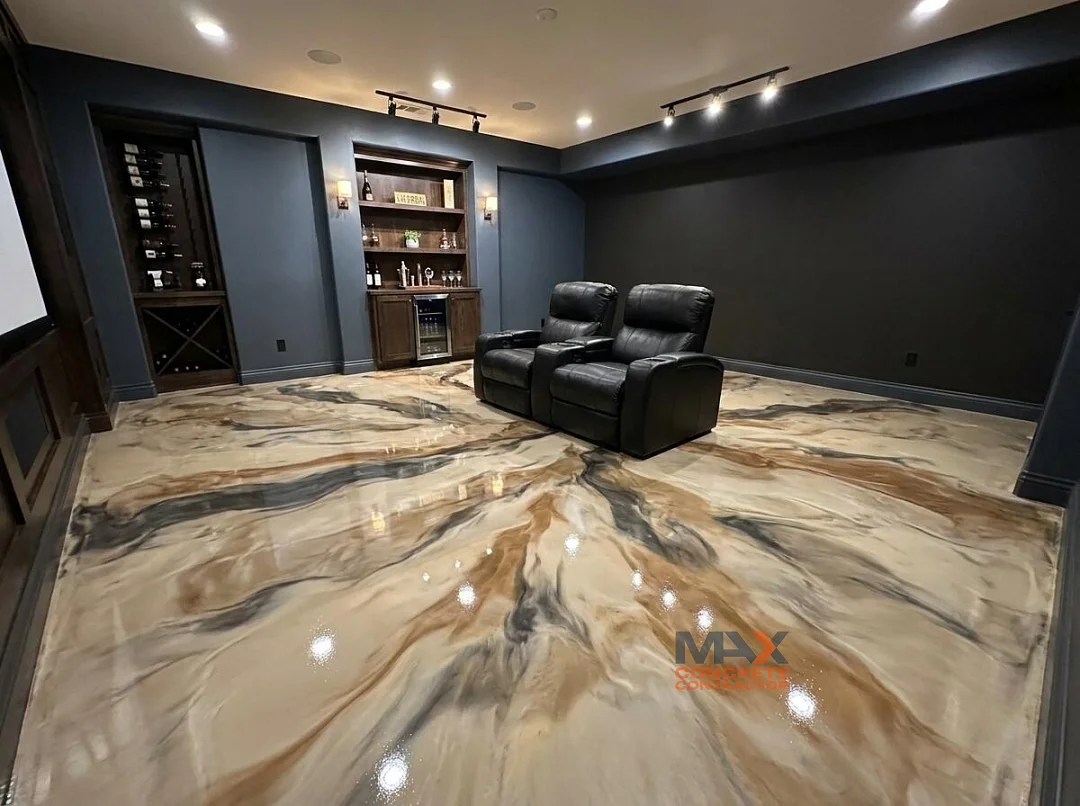
It's become genuinely popular well beyond the garage. Common places for a metallic epoxy floor now include:
- Basements
- Home theaters
- Wine cellars
- Finished bonus rooms
This is especially true in homes going for a modern, high-end look that a standard tile or vinyl floor can't quite match. The reflective, almost liquid appearance reads as a design statement rather than just a durable surface, which is exactly why it's shown up more in actual living spaces over the past several years, not just utility areas.
The one real consideration for interior living spaces is the application process itself, not the finished product. While the floor is being poured and manipulated, it does release fumes that need proper ventilation, which usually means the room, and sometimes the immediate surrounding area of the home, isn't usable by residents or pets for the day of application and through the initial cure. That's a temporary inconvenience, not a long-term issue.
Once fully cured, a metallic epoxy floor is inert and stable, perfectly safe for everyday living space use, which is exactly why it's ended up in so many finished basements and home theaters rather than staying confined to garages and warehouses.
Why This Kind of Work Requires a Licensed, Trained Installer
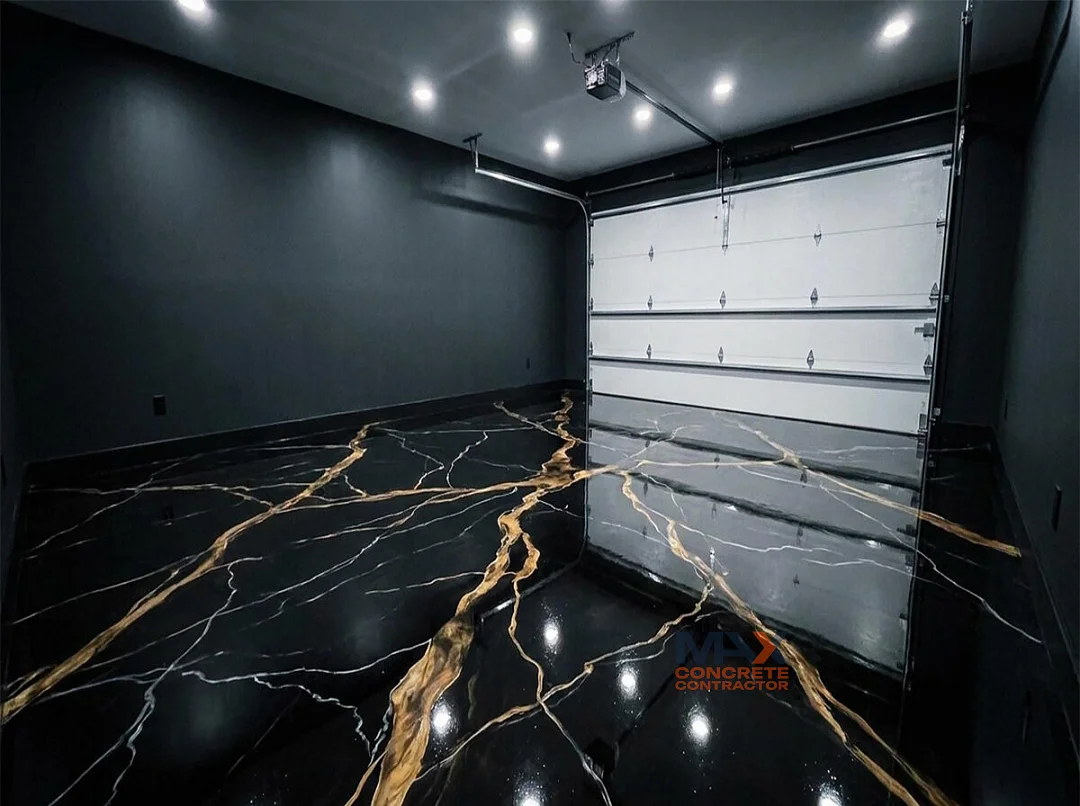
Once a metallic epoxy floor is fully cured, it's chemically inert, there's no off-gassing, no residue, nothing hazardous about walking on it or living around it. The risk lives entirely in the application process, not the finished product, and that's exactly why this work isn't something to hand off to an untrained crew.
Epoxy is a two-part chemical system, and mixing it correctly matters more than most people assume. Get the ratio wrong, and the result can include:
- The floor never fully curing
- A surface that stays tacky indefinitely
- Epoxy curing too quickly to work the pigment before it sets
During application, the mixture releases solvent fumes that require real ventilation, and depending on the specific product, appropriate respirators and skin protection for the installer, not just a dust mask. Working in an enclosed garage or basement without proper airflow planning is a genuine health risk, and in some cases a fire risk given the solvents involved.
That combination, chemical handling, ventilation planning, and the timing pressure of a short working window, is exactly why this work should go to a licensed, insured contractor rather than a general handyman with a kit from a hardware store. Licensing and insurance aren't just paperwork here, they reflect a contractor who's been trained on the actual chemistry involved and who carries liability coverage if something goes wrong mid-application, whether that's a health complaint from fume exposure or property damage from an improperly ventilated pour.
Can a Metallic Epoxy Floor Be Repaired, or Does the Whole Thing Need Redoing?
One of the biggest trade-offs of a metallic epoxy floor is rarely mentioned during the sales process. While every installation produces a completely unique pattern, that same feature makes future repairs much more challenging. The flowing pigments create one-of-a-kind swirls and effects during a short working window, making it impossible to reproduce the exact design later. Unlike solid-color epoxy or flake epoxy flooring, which can often be patched with minimal visual difference, a repaired area on a metallic floor will almost always remain noticeable.
Minor surface wear can usually be restored without affecting the decorative finish, including:
- Light scratches
- Loss of gloss
- Surface dulling
In these cases, applying a new clear topcoat is often enough to bring back the original shine. However, more severe damage requires a different approach, such as:
- Deep gouges
- Chips exposing the concrete
- Heavy impact damage
These issues typically require regrinding and recoating the entire affected section and in some cases the entire floor to avoid an obvious repair that doesn't match the original pattern.
A metallic epoxy floor is an exceptionally beautiful and durable flooring system, but it is best viewed as a finish that benefits from proactive maintenance rather than one that can be spot-repaired invisibly. Understanding this before installation helps set realistic expectations and prevents disappointment if damage occurs in the future.