Is Polyaspartic Coating Actually Durable Enough for a Driveway?
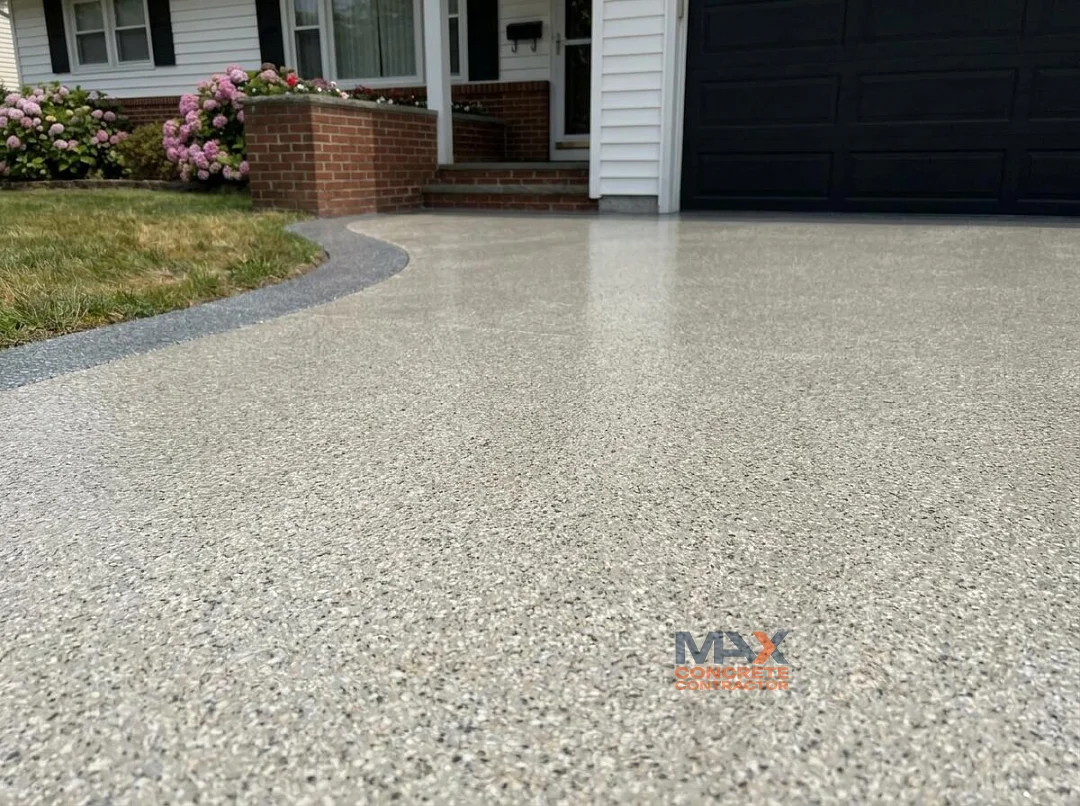
Polyaspartic holds up well against the two things that wreck most driveway coatings: sun and abrasion. Unlike epoxy, which tends to yellow and chalk under prolonged UV exposure, polyaspartic is formulated to resist that discoloration for decades, which matters a lot in a climate like Irvine's where a driveway sits in direct sun for most of the year. It's also notably more abrasion-resistant than epoxy, roughly three times more resistant by most manufacturer testing, which shows up as fewer scuff marks and less wear in tire paths over time. Properly installed, a polyaspartic system commonly lasts somewhere in the range of 15 to 25 years.
Getting that full lifespan out of it comes down mostly to what happens before the coating ever gets applied. Surface preparation matters more than the coating material itself: mechanically grinding or shot-blasting the concrete to open its pores gives the coating something to actually bond to, while a quick acid etch, which some cheaper installs still rely on, gives a noticeably weaker bond that shows up as peeling years earlier than it should. Beyond installation, extending the coating's life is mostly about routine care rather than special maintenance: sweeping off grit before it gets ground into the surface by tires, rinsing occasionally, and avoiding dragging heavy or sharp objects across it. Done right the first time, a polyaspartic driveway coating isn't something that needs babying, it's built to shrug off daily use for a very long time.
Can You Fill Driveway Cracks and Coat Over Them?
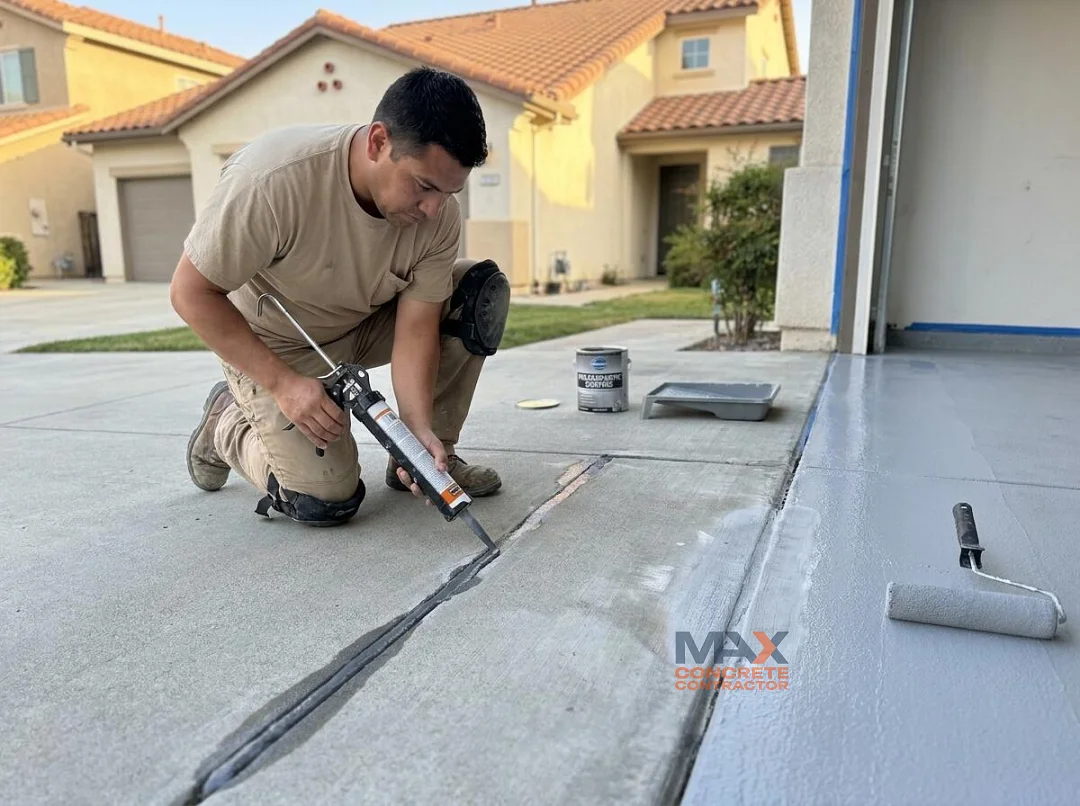
In most cases, yes, but the order of operations matters. A crack in an existing driveway first needs to be properly repaired, typically routed out slightly and filled with a flexible polyurea crack filler rather than just skimmed over with the coating itself. Skip that step, or use a rigid filler that doesn't move, and the industry has a specific name for what happens next: reflective cracking, where the original crack in the concrete slab telegraphs straight back up through the new coating, sometimes within months.
This is actually where polyaspartic has a real advantage over epoxy. It has notably better elongation and flexibility once cured, which means it can flex slightly along with a properly repaired crack instead of remaining rigid and splitting the moment the slab shifts even a little. That's why a well-prepped, properly crack-filled driveway coated in polyaspartic tends to hide old repairs far more convincingly than the same repair coated in a stiffer epoxy system.
What a coating can't do, no matter how flexible, is fix the underlying reason a driveway is cracking in the first place. If cracks are showing up because of active soil movement, poor drainage, or a slab that's genuinely settling, coating over the surface without addressing that cause just means the same cracks reappear later, coating or not. A contractor worth hiring will actually look at why the concrete cracked before recommending a coating, not just quote a price to paint over the symptom.
Is Polyaspartic Coating Safe Around Kids, Pets, and Plants?
Once fully cured, yes, and that's actually one of the material's advantages over older coating systems. Polyaspartic formulations are low or zero VOC and largely odorless compared to traditional solvent-based epoxy, which makes the application process itself noticeably less disruptive for a household. After curing, typically within 24 to 48 hours, the surface is chemically inert: no off-gassing, no residue that transfers to bare feet or paws, and nothing that continues leaching into the surrounding soil or landscaping.
The window that does require some caution is during application and the first day or two of curing. Like most reactive coating systems, polyaspartic gives off fumes while it's being mixed and applied, and while the smell is mild compared to epoxy, it's still not something people, pets, or plants sitting directly in the work area should be breathing for hours on end. A reasonable installer will recommend keeping kids and pets off the driveway and away from the immediate work zone during application and for the recommended cure window, and covering or temporarily relocating any potted plants sitting right at the edge of the pour area, simple precautions rather than genuine long-term hazards.
Once that curing window passes, though, a polyaspartic driveway is about as low-concern as a hard surface gets: no ongoing chemical exposure, nothing tracked into the house on paws or shoes, and nothing that continues affecting anything growing nearby.
How a Polyaspartic Coating Actually Gets Applied
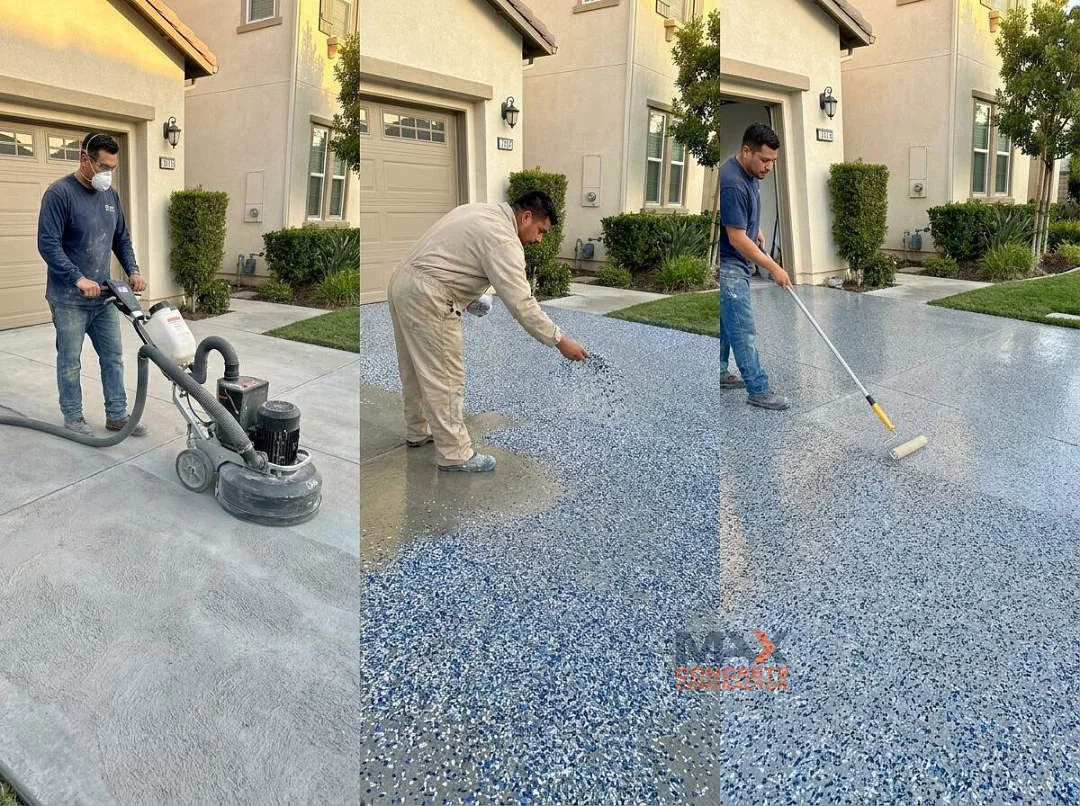
The finished coating is only as good as the surface underneath it, which is why most of the real work in a polyaspartic driveway job happens before any coating gets rolled out. The concrete first has to be mechanically ground, typically with a diamond grinder rather than a simple acid wash, opening up the surface pores so the coating has something to actually bite into. Skipping this step or substituting a cheaper acid etch is one of the most common reasons a coating peels within a year or two instead of lasting decades.
Once the surface is properly profiled and any cracks are repaired, a primer coat goes down first to lock in adhesion, followed by the base coat, which is usually where color is introduced. If a flake system is part of the design, decorative vinyl flakes get broadcast into that wet base coat by hand while it's still tacky, then swept and scraped flat once cured before a clear polyaspartic topcoat seals everything in. Each layer needs to cure to the right point before the next one goes on, and getting that timing and mil thickness correct is genuinely a skill, not something that translates well from a weekend DIY kit.
Because polyaspartic cures so quickly compared to epoxy, this entire sequence can often happen in a single day rather than being stretched across a week, which is part of why professional crews can turn a driveway around fast without cutting corners on any individual step.
Color Options and Why Certified Installation Affects Your Warranty
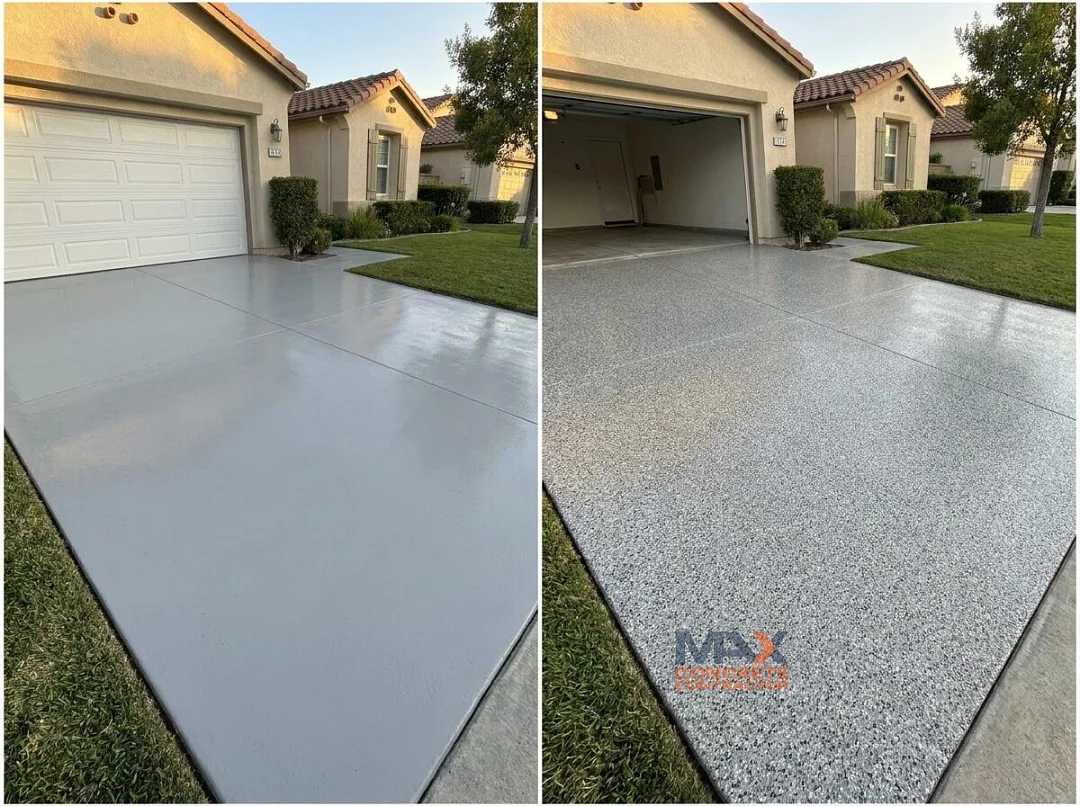
Polyaspartic systems offer more design range than most homeowners expect walking in. Solid color coatings give a clean, uniform look in almost any tone. Flake systems broadcast colored vinyl chips into the base coat, available in dozens of blends from subtle grays to bold multi-color mixes, which also happens to hide everyday dirt and tire marks better than a solid color does. Some systems even offer metallic pigments for a marbled, dimensional look more commonly seen on garage floors but occasionally requested for driveways and entry courtyards too. For homes in HOA communities with specific exterior guidelines, sticking to neutral, natural-toned flake blends is usually the safer choice before committing to anything bold.
One detail worth asking about directly: many polyaspartic product manufacturers only honor their material warranty when the coating is installed by a certified applicator trained specifically on that product line. It's not just marketing, the mixing ratios, working time, and layering sequence vary between manufacturers, and an installer without that specific training can apply the product technically "correctly" by general polyaspartic standards while still voiding the actual warranty on the materials used. Before hiring for a driveway coating, it's worth asking which product line will be used and whether the crew is certified on it, since that answer determines whether a failure five years down the line is actually covered or not.