Types of Concrete for a Sidewalk or Walkway in Irvine, CA
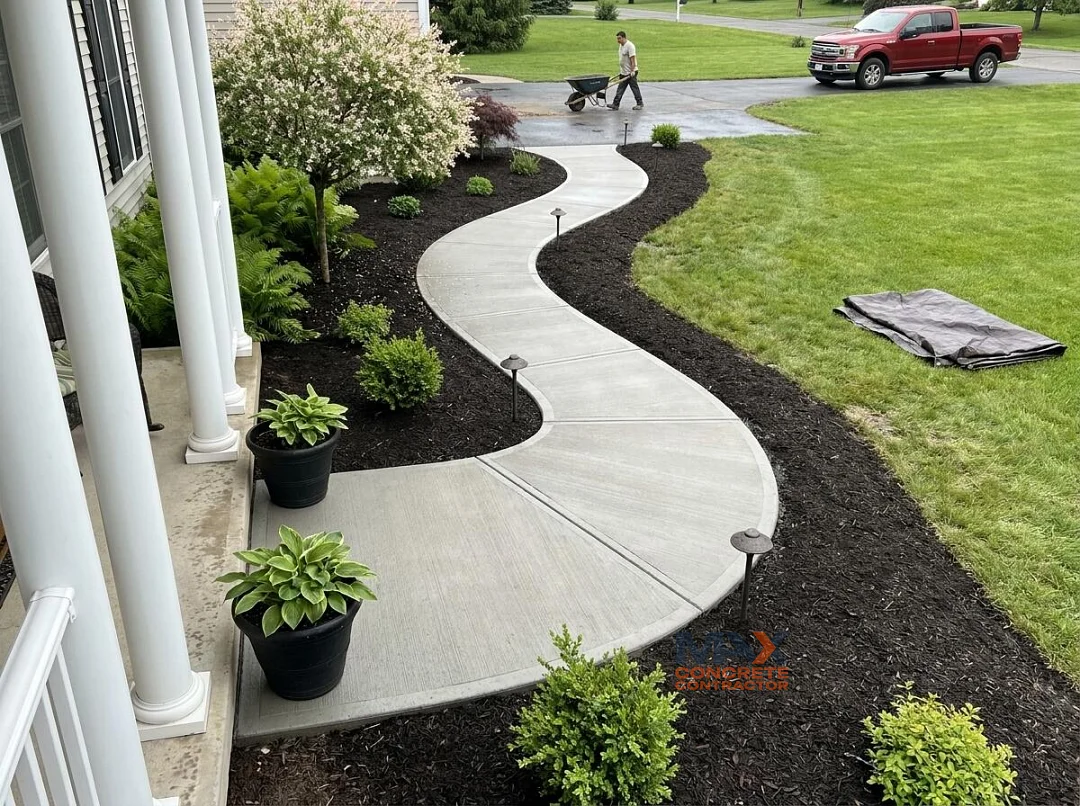
A concrete sidewalk carries a fraction of the load a driveway does, but that doesn't mean the mix design matters any less. Most municipalities, including public sidewalks throughout Orange County, call for concrete rated at 3,000 to 4,000 PSI measured at 28 days, since that's roughly how long concrete needs to reach its full design strength through the ongoing chemical reaction between cement and water, known as hydration. A sidewalk poured and used too early, before that curing window closes, is one of the most common causes of early surface damage.
Thickness requirements are simpler than you'd think:
- A standard concrete sidewalk installation calls for four inches of slab
- Any section where a driveway approach crosses the walkway needs to jump to six inches to handle vehicle weight
That's the same reason a residential concrete walkway along the side of a house rarely needs reinforcement, while a sidewalk approach or apron crossing usually does.
What makes concrete sidewalk Irvine CA projects a bit trickier than driveways is what's underneath them. Southern California's clay soils expand and contract with moisture, and mature street trees send roots directly beneath the slab looking for water. A mix that accounts for proper sub-base compaction and, where tree roots are a known issue, a root barrier or thickened edge, tends to outlast a standard pour by years. Getting this right at the concrete sidewalk installation stage is far cheaper than dealing with a lifted panel two years later.
Sidewalk and Walkway Finishes: Broom, Stamped, Exposed Aggregate and More
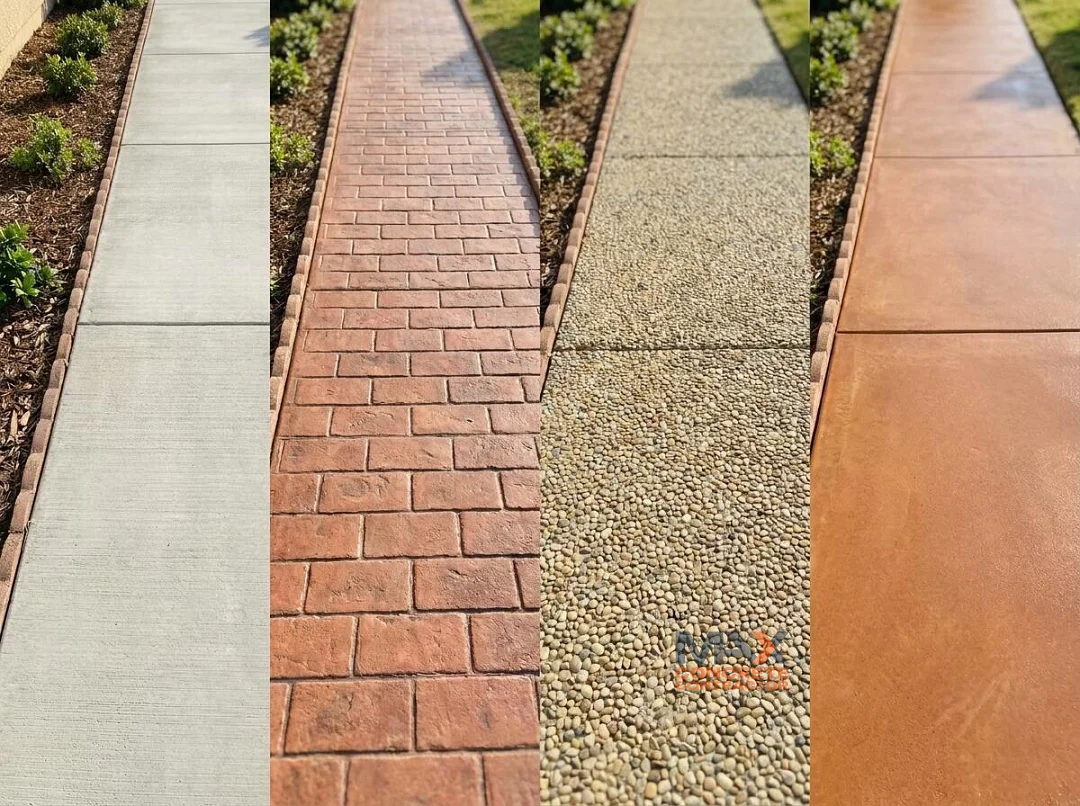
A plain broom finish sidewalk isn't just the cheapest option, it's often the required one. Building codes generally call for a slip-resistant surface on any public walking path, and dragging a broom across wet concrete before it cures is the simplest way to meet that standard. It's worth knowing that at curb ramps and transitions to the street, federal accessibility rules go a step further, requiring a textured detectable warning surface, usually a panel of raised truncated domes, so pedestrians with visual impairments can feel the edge of the roadway underfoot. That's a small design detail most homeowners never notice until they're the ones choosing it.
For a private walkway rather than a public sidewalk, there's a lot more design room:
- A stamped concrete walkway can mimic flagstone, brick, or cut stone at a fraction of the cost and long-term upkeep
- Exposed aggregate walkway finishes expose the natural stone inside the mix, giving a textured, high-traction surface that ages well and hides everyday wear
- A stained concrete walkway adds permanent color without changing the surface texture at all, which is popular for tying a front path into a home's exterior palette
Newer surfacing options are worth a mention too. A resin bound pathway bonds natural stone into a clear resin binder, giving a smooth, permeable finish that drains quickly and won't scatter the way loose gravel does. Where drainage is genuinely a concern, a permeable walkway system lets water pass through the surface rather than run off it. And if you like the segmented look of pavers without the long-term joint maintenance, a paver-look stamped walkway gets you most of the way there in a single continuous pour.
Why Sidewalks Crack in Irvine, CA — Control Joints and Maintenance
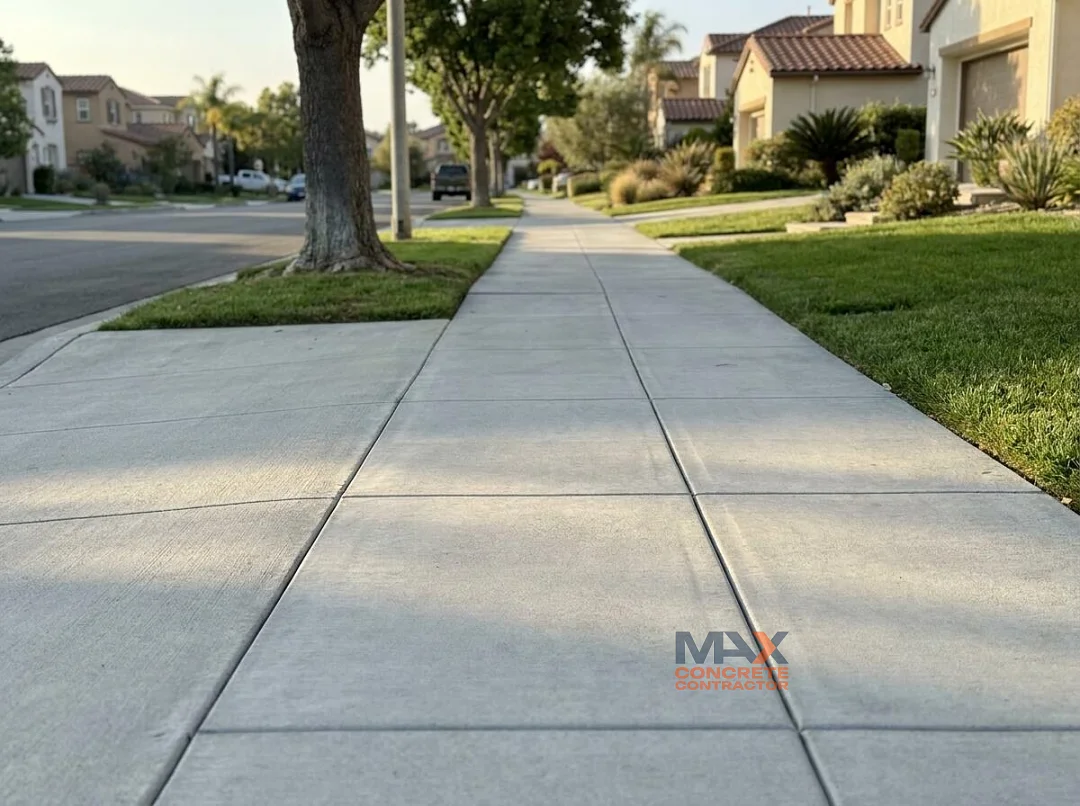
Concrete shrinks slightly as it cures, and that shrinkage creates internal stress that has to go somewhere. Control joints, the straight grooves cut into a sidewalk shortly after it's poured, give that stress a planned place to release instead of letting it crack randomly across the surface. As a rule of thumb, joint spacing in feet should run about two to three times the slab's thickness in inches, which is why a standard 4-inch sidewalk is typically divided into panels roughly four to five feet wide and up to ten feet long, matching common municipal sidewalk specifications.
In practice, sidewalks face a cracking culprit driveways rarely deal with as much: tree roots. A mature street tree can lift an entire panel over a few years, creating both a cracked sidewalk and a genuine trip hazard, which is a liability issue as much as a cosmetic one. Add in clay soil movement and irregular watering from nearby landscaping, and it's easy to see why sidewalk sinking, settling, and heaving show up so often on older streets.
Left alone, small problems compound:
- Weeds in sidewalk cracks work their roots deeper into the joint over each season
- Drainage problems pool water against the slab and accelerate erosion underneath
- What starts as a hairline crack becomes an uneven sidewalk repair job instead of a simple patch
The good news is that fixing a cracked concrete sidewalk usually comes down to catching it early: sealing joints, keeping root growth managed, and re-leveling a single lifted panel is far less disruptive than a full resurfacing project once several panels have failed.
Why Hire a Licensed Contractor for Sidewalk and Walkway Work in Irvine, CA
Unlike a private backyard patio, a sidewalk usually sits partly or entirely within the public right-of-way, which changes the rules of the job. A licensed concrete contractor Orange County homeowners can verify carries the insurance and track record needed to take on work that a city inspector will eventually review, something a walkway contractor without proper licensing simply isn't equipped to guarantee.
Insurance is the part people skip asking about until something goes wrong. If a worker is injured or a neighbor's irrigation line gets damaged mid-project, a properly insured concrete walkway contractor absorbs that risk instead of passing it on to you. It's a fair question to ask before signing anything, and any legitimate concrete company should have no problem answering it directly.
Because sidewalks touch public property, a sidewalk replacement permit is usually required before demolition even starts, and a contractor experienced in right of way concrete work will already know how to coordinate that approval with the city rather than leaving it to you to figure out mid-project.
The step that matters most, though, happens before a single slab of old concrete comes up: calling 811 to reach DigAlert, the regional utility locating service for Southern California. Sidewalks and walkways routinely run near gas lines, irrigation systems, and buried electrical conduit, and a quick, free locate request marks all of it before any digging begins. Skipping that call is how a routine sidewalk replacement turns into a much more expensive story.
Concrete Sidewalk vs Pavers in Irvine, CA
Before comparing materials, it helps to clear up a common mix-up: a sidewalk usually refers to the public path running along the street within the city's right-of-way, while a walkway is the private path connecting your driveway or porch to that sidewalk. The distinction matters because it affects who's responsible for what, and which material makes sense where.
For either one, the concrete versus pavers question usually comes down to the same trade-off. A poured concrete slab is continuous, which means no shifting joints and no sand base that erodes and settles over time the way a paver walkway eventually does. A properly installed slab regularly holds up for 25 years or more with minimal upkeep beyond the occasional sealing.
Pavers still win on pure pattern variety out of the box, but stamped concrete has closed most of that gap. It reproduces the visual texture of brick, flagstone, or cobblestone in a single pour, so there's no long-term joint maintenance, no re-sanding, and far less opportunity for weeds to take hold between the pieces.
On cost, pricing depends heavily on finish and site conditions, but concrete generally comes out ahead of pavers once you factor in years of upkeep rather than just the installation price. For a straightforward concrete sidewalk installation, Orange County homeowners can expect a clear, itemized quote, and comparing that against a paver estimate side by side usually makes the long-term case for concrete pretty clear.