What Stamped Concrete Actually Is, and Where It Came From
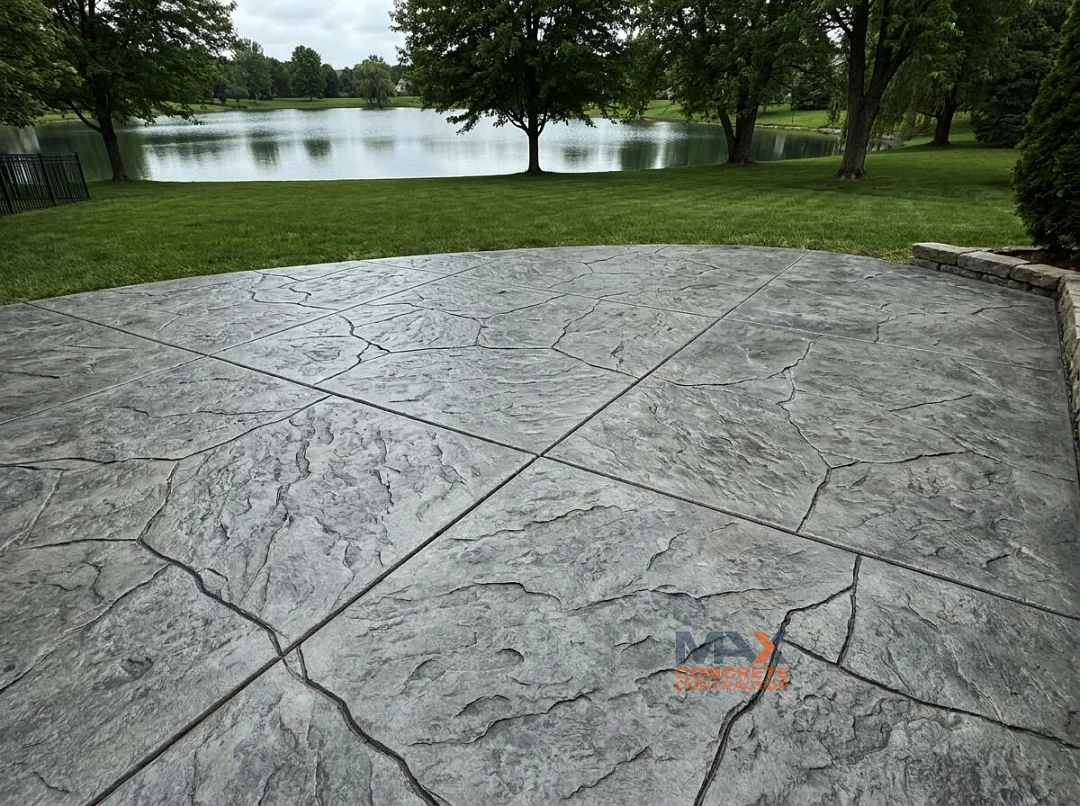
Stamped concrete has a genuinely California origin story. The technique was developed in the mid-1950s by Brad Bowman, a former WWII camouflage specialist turned contractor, who first used it on the sidewalks of Carmel, California, calling his early version "ornamented concrete." Bowman went on to found the Bomanite Company, and decades later he's still generally credited as the father of stamped concrete as an industry.
The process itself is simpler than the finished result suggests. While the concrete is still wet and workable, textured mats or stamping tools are pressed into the surface to imprint a pattern, whether that's the look of natural flagstone, cut ashlar, cobblestone, or wood planking. Color and a release agent go down before the stamping happens, and once the concrete cures, that single slab reads as a paved surface made of individual stones or planks, without a single actual joint between them to maintain.
What makes this appealing beyond the visual is that it's still one continuous, structurally sound pour underneath the texture. Unlike pavers or natural stone, there's no sand base to shift and no individual piece that can work loose over time, the pattern is a surface treatment on a slab that behaves, structurally, exactly like any other poured concrete driveway or patio.
Choosing a Pattern That Actually Fits Your Home
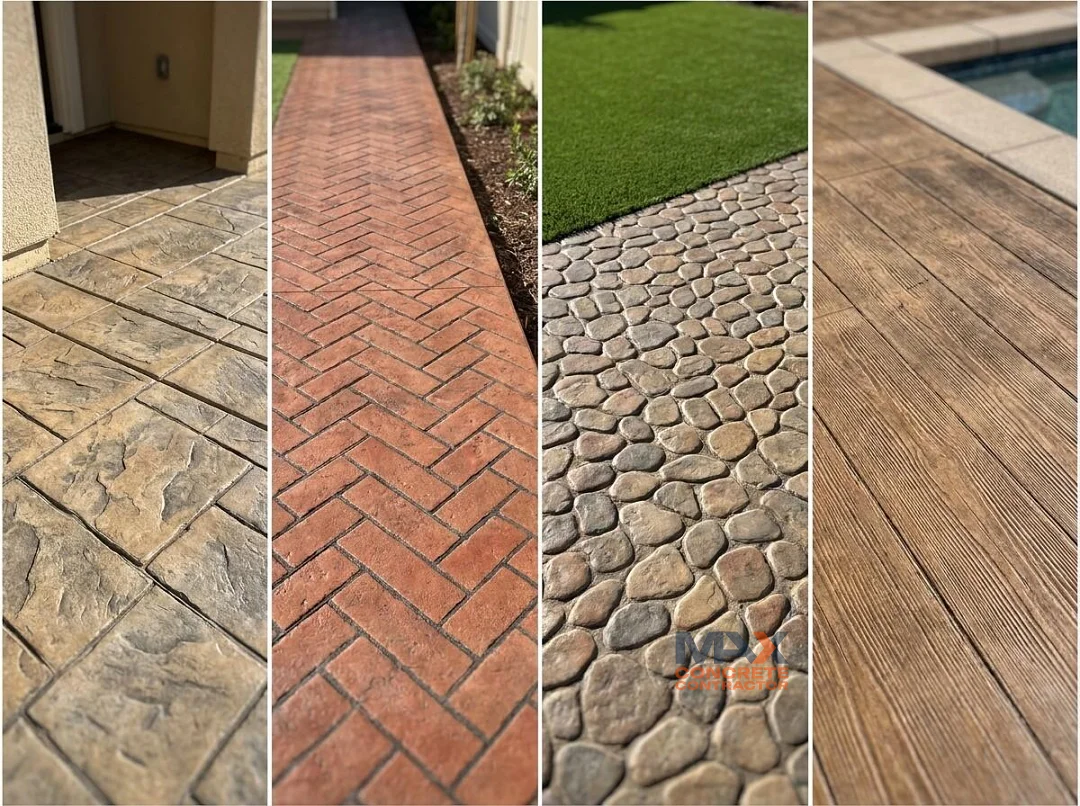
Stamped concrete comes in far more variety than most homeowners realize before they start looking:
- Ashlar slate, an irregular, large-format stone pattern, tends to suit modern and Mediterranean-style homes common throughout Irvine
- Running-bond or herringbone brick patterns lean more traditional and work well framing a front walkway or entry
- Cobblestone brings an Old World look that pairs naturally with stucco and tile-roof architecture
- Wood-plank stamps have become popular around pools and patios where the warmth of decking is wanted without the maintenance a real wood deck demands in Southern California's sun
Scale matters as much as the pattern itself. A large-format stone pattern on a small side walkway can look oversized and awkward, while a fine cobblestone texture on a sprawling driveway can read as busy rather than elegant. It's worth walking the actual space, not just looking at a sample board, before settling on a stamp size.
Because the pattern is applied to a poured slab rather than assembled from individual units, it's also possible to mix patterns within one project, a border of running-bond brick framing a field of ashlar slate, for example, in a way that would be considerably more expensive to achieve with cut natural stone or pavers.
How Color Gets Into Stamped Concrete
Color in stamped concrete isn't just one technique, and the method chosen affects both the look and the durability of the finished surface. Integral color is mixed directly into the concrete at the batch plant, giving a consistent base tone all the way through the slab, so a surface chip or wear spot doesn't reveal a different color underneath.
Dry-shake color hardener takes a different approach: color pigment combined with hardening agents is broadcast onto the surface of the wet concrete before stamping, then worked in as the pattern gets imprinted. This does double duty, adding color while also densifying and hardening the top layer of the slab, which is part of why professionally installed stamped concrete tends to hold up better against abrasion than a plain broom finish over time.
Once the base color is set, a release agent used during stamping often leaves a secondary antiquing effect in the recesses of the pattern, mimicking the natural shading and variation of real stone. Acid or water-based stains can also be applied afterward for additional depth, highlighting grout lines or adding subtle variegation. Combined well, these layered techniques are what separate stamped concrete that reads as an obvious pattern from stamped concrete that genuinely convinces people it's real stone from a few feet away.
Maintaining Stamped Concrete: Sealing and Slip Resistance
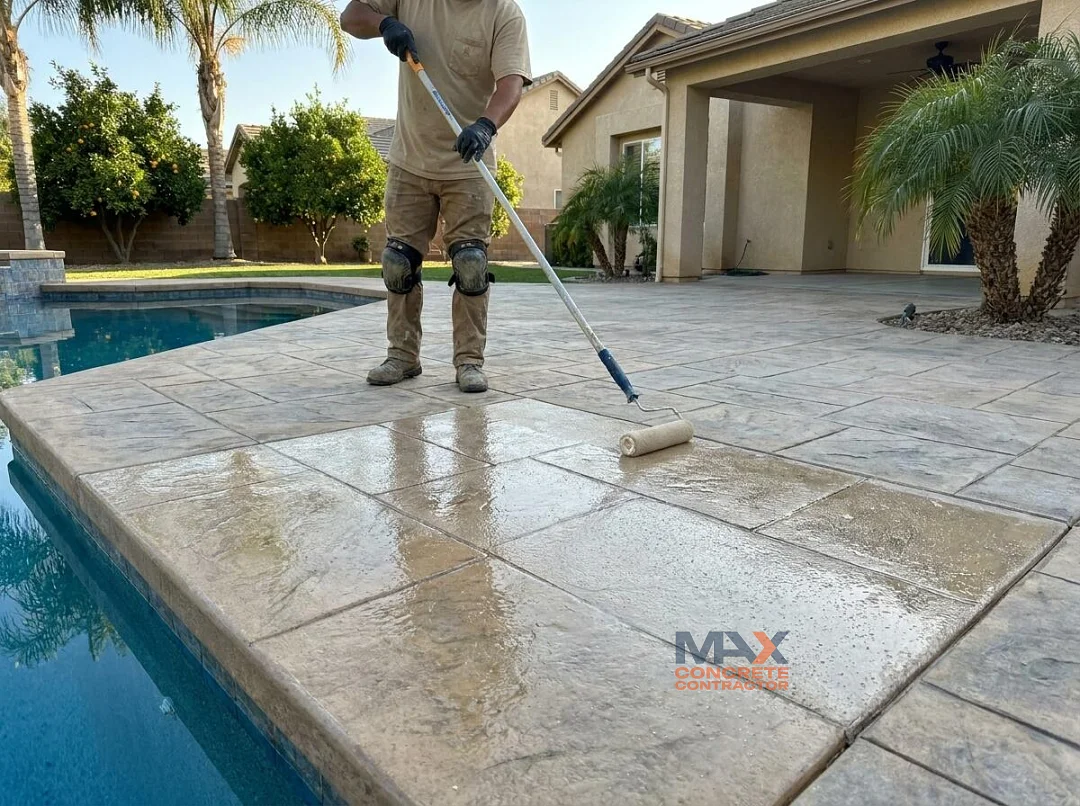
A sealer isn't optional on stamped concrete the way it might be on a plain gray slab, it's what protects the color and texture from UV fading, staining, and moisture intrusion into the recessed pattern lines. Most stamped surfaces need resealing roughly every two to three years, sometimes sooner in areas with heavy pool traffic or direct afternoon sun, which is common across most of Irvine.
The trade-off with a glossy, film-forming sealer is slip resistance, which becomes a real safety concern anywhere the surface gets wet, a pool deck especially. That's usually solved by mixing a fine polymer or aggregate grit additive into the sealer itself, giving the surface traction without dulling the color or texture underneath. Skipping this on a pool deck in favor of a purely glossy look is one of the more common regrets homeowners mention after the fact.
Beyond sealing, stamped concrete is otherwise low-maintenance:
- Routine cleaning
- Prompt attention to any hairline cracks before they widen
- Keeping an eye on the sealer's condition
Compared to the joint maintenance, weeding, and releveling that pavers or natural stone eventually demand, a properly sealed stamped concrete surface stays looking close to day one for a lot longer with a lot less ongoing effort.