Resin-Bound Pool Deck Installation in Newport Beach, CA
11.07.2026
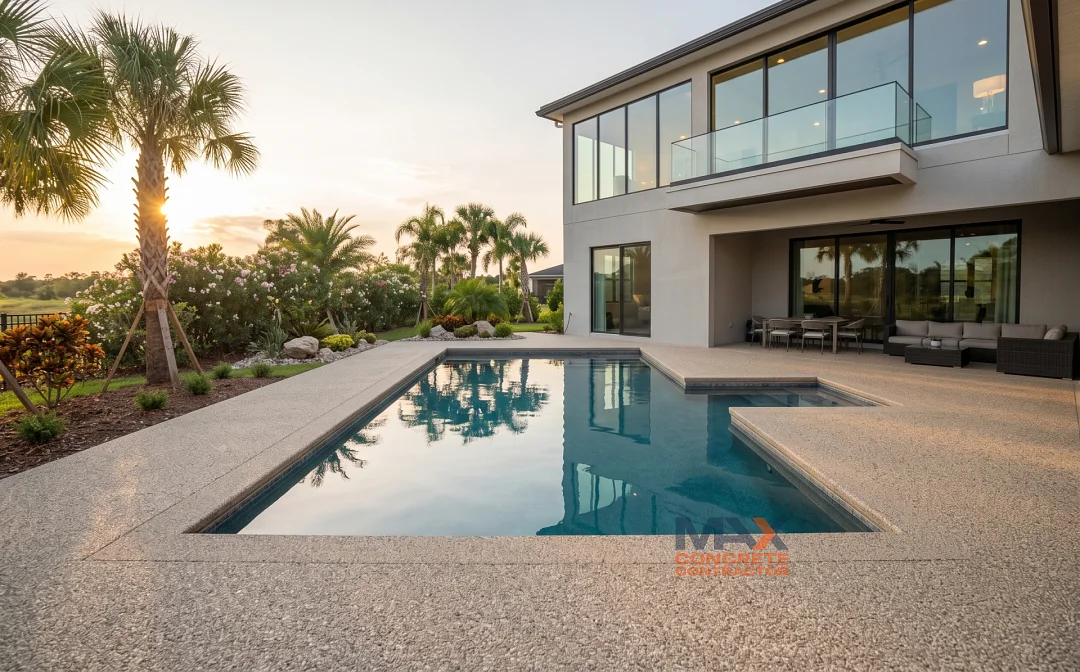
This Newport Beach, CA backyard called for a pool deck that could handle constant sun and water exposure while staying comfortable to walk on barefoot. We installed a resin-bound surface, bonding natural aggregate stone with a clear resin binder around the full perimeter of the pool and spa, from the covered patio and outdoor seating area to the planted garden borders. The finish is smooth yet texturally rich, permeable so it drains quickly after pool use or rain, and far cooler underfoot in direct sun than standard poured concrete or pavers. A clean expansion joint runs along the pool coping, keeping the transition between deck and pool crisp and precise. Beyond function, the light, warm tone of the resin-bound surface ties together the modern stucco architecture, the pool's dark tile coping, and the surrounding palm and tropical landscaping — giving this Newport Beach property a resort-style outdoor living space built to last.
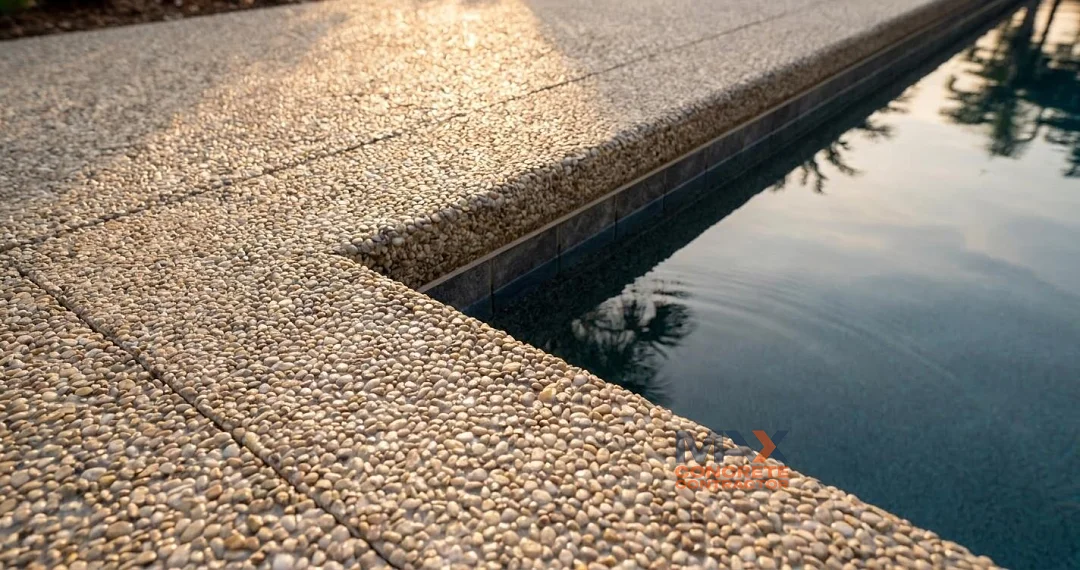
Pool deck surfacing is one of the most demanding applications any concrete company will face, and this Newport Beach project shows why so many homeowners across Orange County are moving away from standard poured concrete or paver decking around their pool and spa areas. A pool deck sits in near-constant contact with chlorinated water, direct sun, and heavy foot traffic from bare feet, which means the surface has to solve for heat retention, slip resistance, and drainage all at once — something plain concrete and traditional pavers each fall short on in their own way. Standard poured concrete can get uncomfortably hot underfoot in direct Southern California sun, while paver decking, though popular, is prone to individual units shifting or becoming uneven over time as the sub-base settles near a pool shell. Resin-bound surfacing addresses both problems, which is exactly why it was the right call for this Newport Beach backyard.
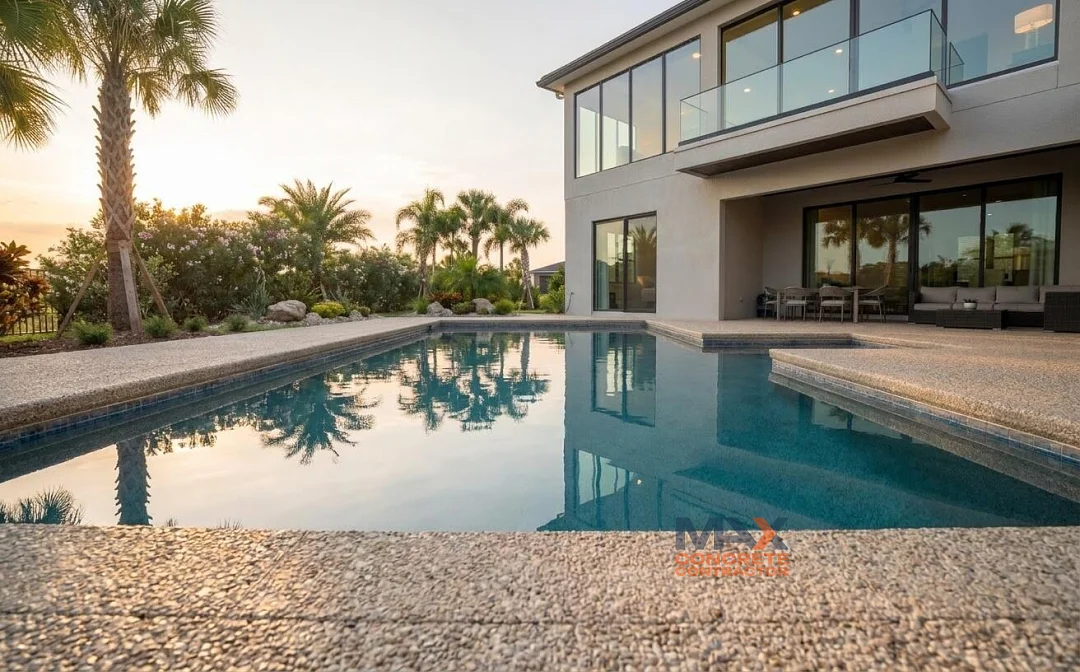
For a residential concrete contractor, pool deck work carries a different set of requirements than a typical driveway repair or walkway installation. The resin-bound surface has to be installed around curved pool edges, spa steps, and coping details with tight, clean transitions, and it has to include a properly placed expansion joint along the pool coping itself — a detail that keeps the deck and the pool shell from stressing each other as temperatures shift throughout the year. On this project, that expansion joint runs the full length of the coping, keeping the line between deck and pool crisp while still allowing each material to move independently. Getting that joint placement wrong is one of the more common mistakes homeowners run into when a pool deck is installed by a crew more used to standard concrete work than resort-style outdoor living spaces.
Permeability is another reason resin-bound surfacing has become the preferred pool deck material for homeowners across Newport Beach and the broader Orange County coastline. Unlike sealed concrete or tightly fitted pavers, a resin-bound deck allows water from splash-out, rain, or spa overflow to drain directly through the surface rather than pooling on top or running toward the house. That matters immediately after pool use, when a deck covered in slick surface water becomes a real slip hazard, and it matters over the long run, since standing water is one of the main causes of surface staining, algae growth, and eventual concrete resurfacing needs around pools that use less permeable materials. For a backyard built around a covered patio, outdoor seating, and planted garden borders like this one, keeping water moving through the deck rather than sitting on it also protects the surrounding landscaping from erosion and runoff damage.
Temperature is often the deciding factor for Newport Beach homeowners comparing pool deck materials, and it's one of the most noticeable differences between resin-bound surfacing and standard poured concrete or pavers. Dark-toned pavers and plain gray concrete both absorb and hold heat throughout the day, which can make a pool deck nearly unusable barefoot during peak summer hours. The light, warm-toned resin-bound finish used on this project stays noticeably cooler underfoot even in direct sun, which is a practical benefit as much as an aesthetic one for a family actually using the pool and spa daily rather than just looking at it from indoors.
As a concrete company that handles everything from standard driveway repair and concrete resurfacing to specialty pool deck surfacing, we treat every backyard project as its own scope rather than applying a one-size-fits-all approach. A licensed concrete contractor Orange County homeowners trust for pool deck work should be able to walk through material options — resin-bound, exposed aggregate, or traditional concrete — and explain honestly which one solves for heat, drainage, and durability best for that specific property, rather than defaulting to whatever's fastest to install. We offer a free estimate for homeowners in Newport Beach and throughout Orange County who are planning a new pool deck, replacing an aging one, or comparing resin-bound surfacing against pavers and poured concrete before construction begins.
If your current pool deck gets too hot to walk on, pools water instead of draining, or has pavers that have started shifting near the coping, it's worth getting a concrete estimate that includes resin-bound surfacing as an option — for resort-style backyards like this Newport Beach property, it consistently outperforms standard concrete and pavers on the details that actually matter poolside: heat, grip, and drainage.